



|
Mar 10 2017
Operations Summary – Week of 3/6/17
Mar 09 2017
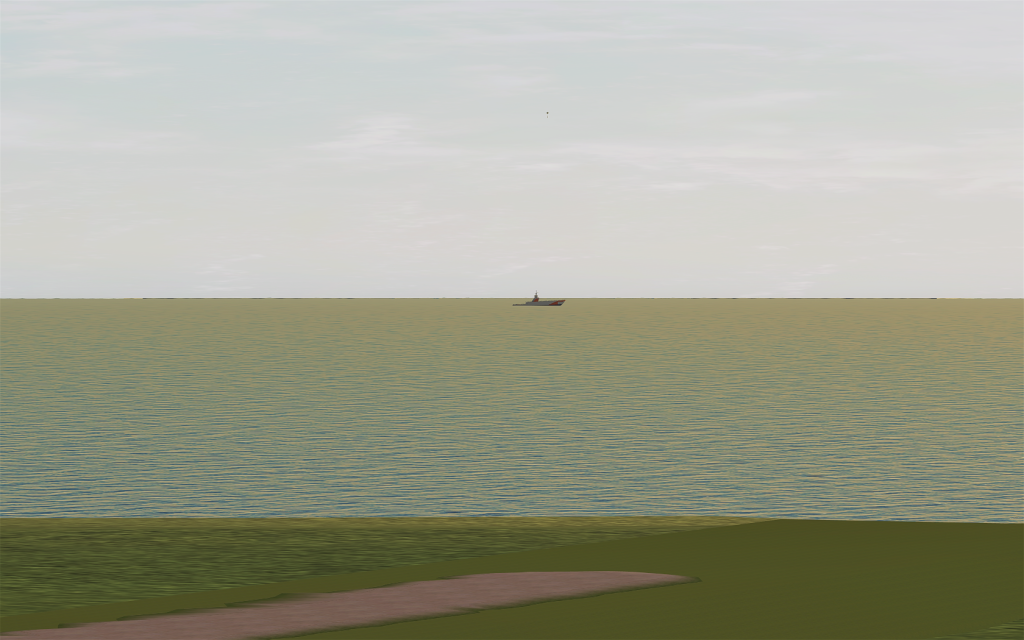
Low-Altitude Science Survey 11
 Measure the temperature in flight below 17,300 meters near Zone 5-BBQ for Shadow Space Technologies Unlimited
Mar 08 2017
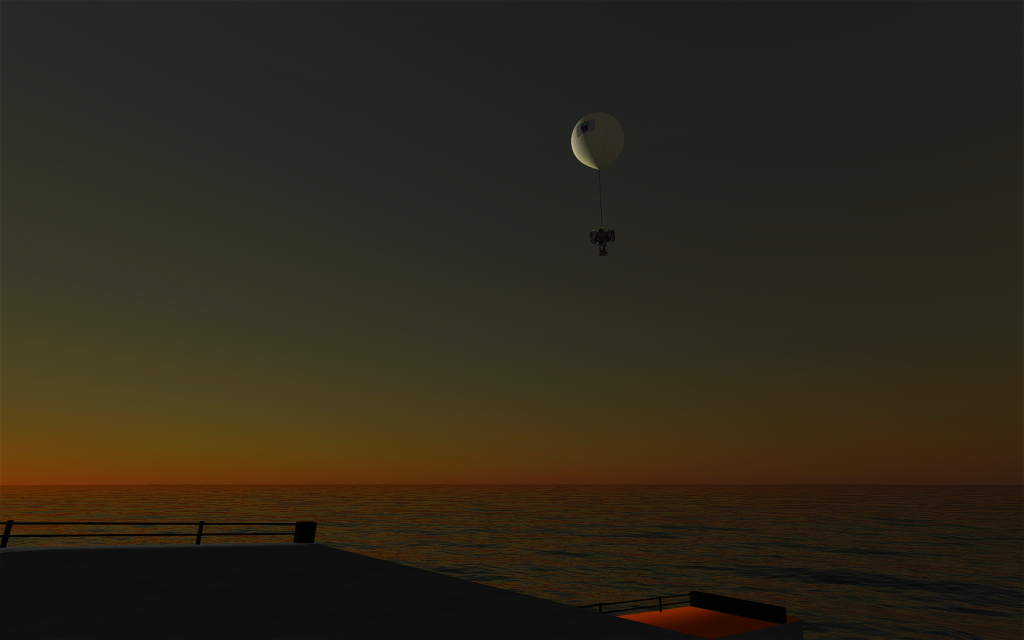
High-Altitude Science Survey 3

Feb 14 2017
KSC Shutdown Due to Health Concerns
The Disease Management Organization has concluded its analysis of the air samples, blood samples and surface samples it has taken from KSC and its employees over this past week. It looks like a normally harmless bacteria has mutated slightly in the generations since kerbals have lived on the surface and has been infecting kerbs here at KSC over the past few weeks. On its own, it causes minor symptoms from coughing to shortness of breath to dizziness and several kerbs have been struck by it lately but none were incapacitated enough to actually check in to the medical center. Recently however trees from the Grasslands to the west have been releasing a large amount of pollen into the air, and kerbs spending more time out west in the Grasslands (field researchers, mostly) were the first to become affected, as the pollen brought about a mild allergic reaction in almost everyone that then allowed the bacterial infection to also grow more serious as the body defended from attacks on two fronts. The entire of KSC was affected after a large wind storm passed through the area, stripping large amounts of pollen from trees and depositing it over KSC.
It’s actually not so surprising that we might encounter diseases on the surface that are slightly or even extremely mutated from pathogens that were encountered in the past when surface living was more widespread. Given that the Kerbal Space Center is the one location on the surface were kerbs have lived above ground for an extended period of time, if any sort of epidemic were to happen it would happen here. The tree pollen especially is something that kerbals haven’t had to deal with for a few generations – underground there are moss spores but no trees.
The bacterial infection that began this whole ordeal needs to be purged from the KSC – surface swabs have found colonies growing in various places around the campus and the entire facility will need to be decontaminated. The DMO expects this to take a week at least, so we will be moving all staff to a quarantine facility in Umbarg City where everyone will be checked over and cleared of bacterial infection while the KSC itself is also cleaned. We hope to be back at KSC by Feb 27th.
All of our sick are being treated for the bacterial infection and are recovering well. We did have one death of an elderly staff member but an autopsy has since shown it to be from natural causes and not directly related to the bacterial infection.
Moving forward once operations resume, we will be setting up better medical protocols for field researchers returning from science expeditions as well as for UTV teams returning from balloon launches. Air quality monitors will let us know when pollen levels become high enough to cause problems. Living on the surface certainly brings back old challenges, but we’re working to adapt once more.
Feb 10 2017
Third Moonlet of Kerbin Captured… by Kerbin?
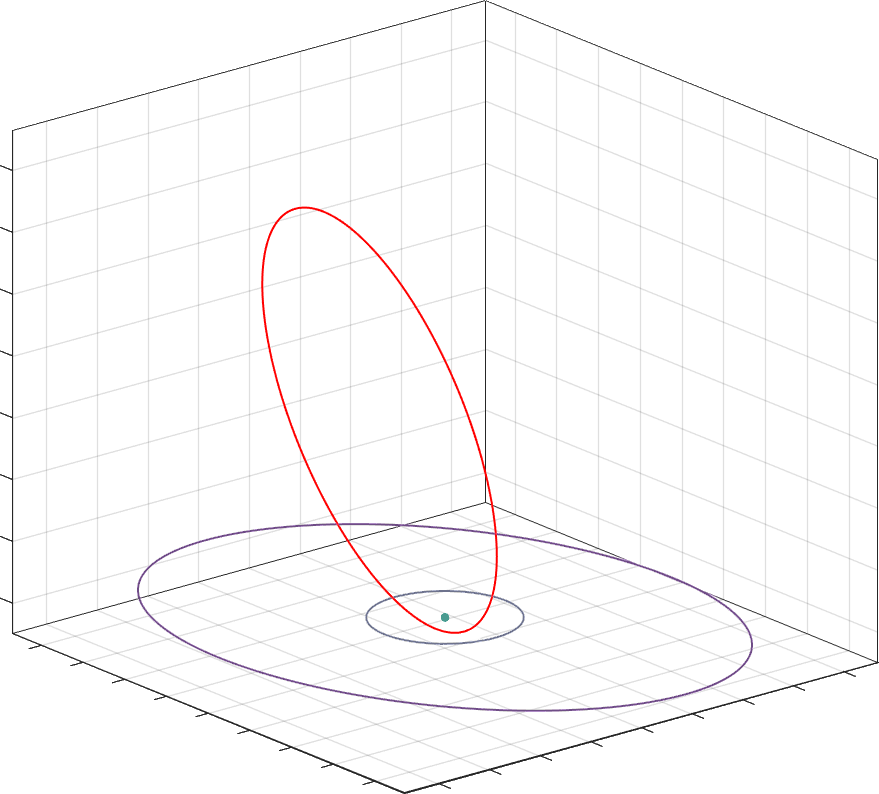 Today the Asteroid Tracking Network revealed that a third moonlet had been discovered in one of its sky surveys and after several nights of study astronomers have determined its orbit well enough to declare their findings. The new moonlet, which was designated by the ATN as ICX-922(A) is the smallest object yet to be captured, massing in at a mere 101.790t, or 0.08% the mass of DGU-266(B) and 0.0007% the mass of Meeny (which is a Class-C asteroid). The circumstances under which this object were captured are only theorized, given that it did not involve the usual suspect, Mun. In the case of both Meeny and DGU-266(B) (naming suggestions are still being taken!) Mun got in the way of their trajectory through the Kerbin system and as it passed them it pulled at them with its gravity, slowing down their velocities enough to remain in orbit around Kerbin.
The leading theory among astronomers is that ICX was traveling leisurely along when Kerbin caught up from behind, causing the asteroid to fall back and around Kerbin while also being carried along, so when it left Kerbin’s SOI it also got a boost, or assist, from our planet’s velocity. But the exit from Kerbin’s SOI may have been more of a “lob” than a “throw”, and the asteroid shortly fell back towards Kerbin but this time it was moving faster and the slower movement of Kerbin dragged its velocity back down far enough that when it was lobbed back out, it didn’t quite make it all the way this time. The apokee of ICX’s highly elliptical orbit rises to 83,495km, which is just 664km short of the SOI boundary.
ICX will undergo much more study in the months to come, and astronomers see no reason why it would be going anywhere anytime soon given that it can’t interact directly with Mun. The Kerbal Astronomical Society will be in charge of selecting a name, although it may decide to go to the public once again.
Feb 07 2017
High-Altitude KerBalloon Use to Resume with Caution
 After we had a balloon malfunction in one of our previous high-altitude missions to gather data above 18km, the KerBalloon Program engineers took a good look at what remained of the balloon when it was recovered out of the water. When a balloon bursts, most of it ends up in pieces that flutter down on their own and are not recovered, but a good portion stays attached to the cable strung out from the casing. Engineers eventually came to the conclusion that the material had become brittle during the flight and was not able to expand fully before bursting. They suspected ice and sent their data and hypothesis off to KerBalloon to get a second opinion from the balloon makers themselves.
We just heard back from KerBalloon today and they concur – icing on the balloon contracted the envelope and caused it to rupture well short of its intended altitude of 24.9km. This is, in retrospect, an event that everyone should have seen coming, but no one really did. We of course know high-altitude temperatures are very cold – by the time you get to 18km it can be a cold as -72°F (-57.8°C). It actually does start to get warmer the higher you go as you pass through 13km but that slow rise in temperature starts from around -95°F (-70.6°C) so it never gets above freezing. Any water vapor that happens to collect on the balloon on the way up will freeze and stay frozen, gradually tightening up on the envelope and preventing it from enlarging further as the gas inside expands due to the decrease of outside pressure.
Another sign of concern noted by KerBalloon is the ascent data did not record a significant drop in the balloon’s vertical speed, which means there wasn’t enough ice to weigh it down enough to affect its rate of climb. This low-tolerance to icing is a large disappointment for the new material that was developed for these high-altitude balloon models.
We have placed an order for additional units, as KerBalloon assures us they will not have a solution to this problem anytime soon, but they will be working on it. For future high-altitude balloon launches we will need clear skies and have to keep a careful eye out for high-altitude clouds that would signal enough water vapor in the upper-atmosphere to possibly have an icing effect on our balloon ascent. The low-altitude variants remain immune to this problem thanks to their much thicker and more robust envelope material, which also doesn’t have to expand as much.
Feb 02 2017
Second Moonlet of Kerbin Discovered
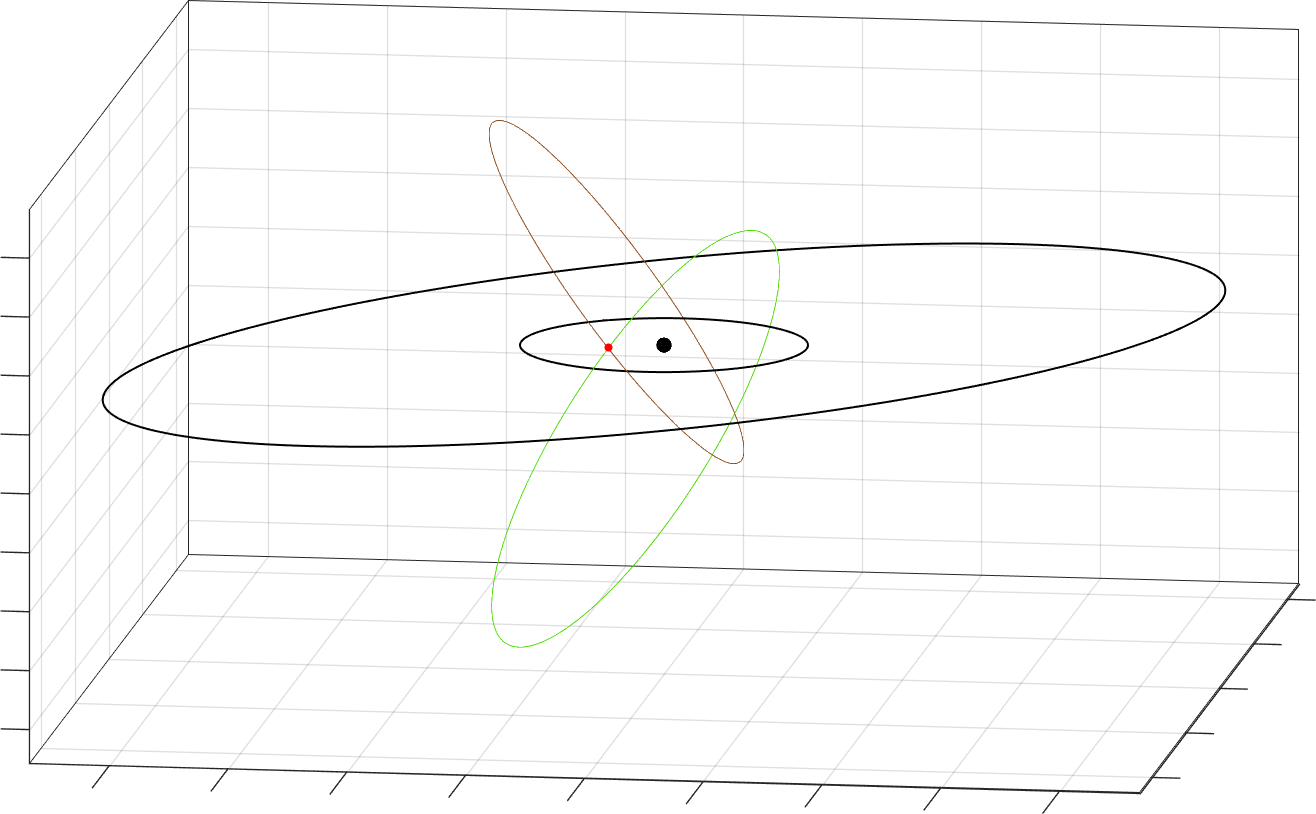
Meeny (green) & DGU (brown) – the red dot where their orbits cross is where the discovery was made
It was amateur astronomer Remises Kerman’s first attempt to look for Meeny in the night sky with his new high-powered telescope. He had pulled all the data from the Asteroid Tracking Network database and calculated the trajectory so he would know where and when to point his scope. However he didn’t double-check his calculations, or he probably would have noticed the simple arithmetic error that caused him to point his scope at the wrong section of sky and at the wrong time – Meeny was several hours from being visible at that location. Still, he saw something moving against the backdrop of stars and nebulae over the course of 3 hours of watching. Realizing its motion wasn’t in the proper direction for it to be Meeny and that it was traveling too fast to be a distant object, he continued to study the object for the next night and did a rough calculation of its trajectory to confirm it was orbiting Kerbin. He quickly alerted the ATN, who did follow-up observations to confirm the existence of the asteroid, which they cataloged as DGU-266(B) and is now available on our Flight Tracker. It now falls upon the Kerbal Astronomical Society to choose a name for the object. They are considering sourcing names from the public to help increase outreach and interest in astronomy.
The asteroid is currently predicted to skim through Mun’s SOI again shortly on 2/12, after which astronomers will once more turn their scopes on it for a detailed study of its orbit. Everyone who keeps records of the star fields they observe over time is also checking through their archives to see if they can spot DGU in any of them, to possibly give us a time frame for when the asteroid was captured by Mun. Unlike Meeny, we did not see this capture coming ahead of time and due to its low eccentricity, it’s likely been in orbit for a while now. It’s very likely there have been other small moonlets that have come and gone thanks to Mun without our even knowing they were there.
Remises is still hoping to get a look at Meeny through his ‘scope next time it passes around the night side of Kerbin. He’ll double-check his calculations too he says.
KSA Main Image Gallery

Updates from Mission Control
Kerbal Space Agency
@KSA_MissionCtrl
@KSA_MissionCtrl
we’ve also placed another order for K2-X engines. This latest Ascension Mk3 mission has shown we want to move faster than planned to the Mk4 so the thrust vector control version of the WildCat-V will begin development immediately and we will order more when that is ready
🔄 0
❤️ 2
Kerbal Space Agency
@KSA_MissionCtrl
@KSA_MissionCtrl
a final round of static fires last week has completed the WildCat-V’s second qualification run & we’ll know for sure by next month if it is finally ready for production. If so, two will be ready by Q3 2021 for Extremis I and a Min/Minmus mission
🔄 0
❤️ 1
Kerbal Space Agency
@KSA_MissionCtrl
@KSA_MissionCtrl
the Viklun upper stage will be systematically dismantled to help determine the cause of the flexing and what effect it had on the overall structural integrity of the rocket. The damage from splashdown will reduce these findings but hopefully the effort will still prove valuable
🔄 0
❤️ 1
Kerbal Space Agency
@KSA_MissionCtrl
@KSA_MissionCtrl
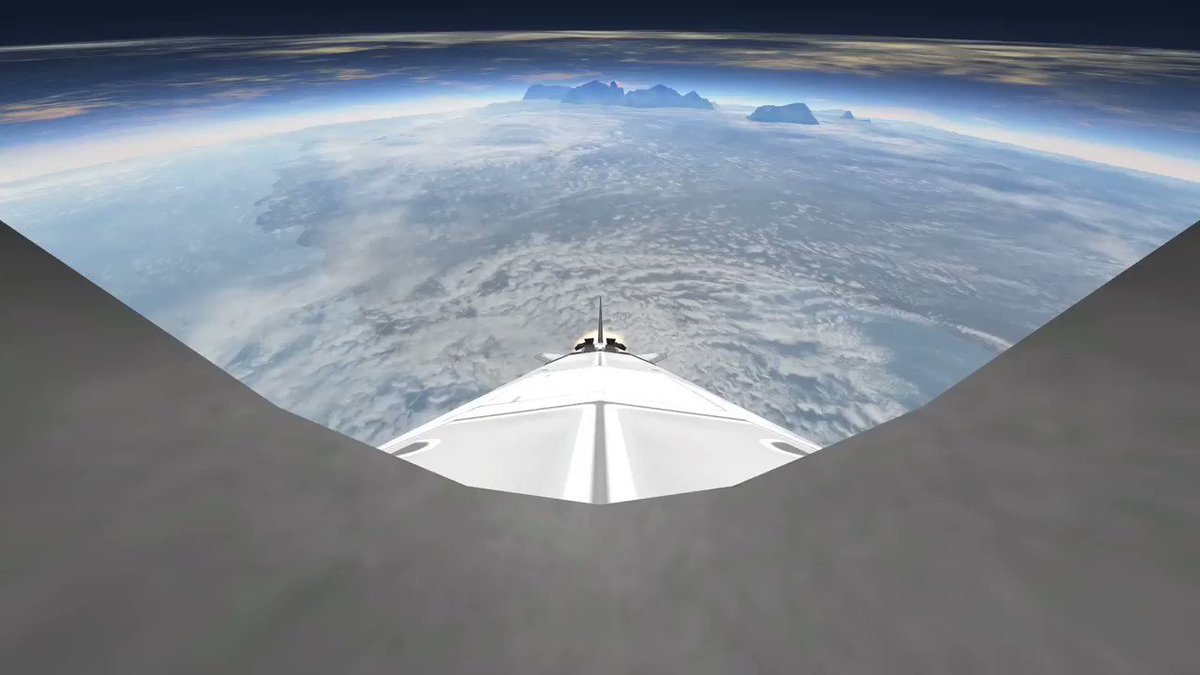
onboard vid shows the pitch oscillations during the Ascension Mk3’s ascent were way worse than we imagined – the *entire rocket flexed* 😱 inherent structural issue? Could also be from the air pressure at the nose (think boat bow slamming up & down on hvy seas) from shallow angle

🔄 0
❤️ 5
Kerbal Space Agency
@KSA_MissionCtrl
@KSA_MissionCtrl
when the Viklun stage splashed down the empty fuel tanks blew out, helping to alleviate impact pressure on the payload but fragments pierced the flight computer & damaged the flash memory. Onboard tlm data was lost but the ops log final mins were able to be pieced back together

🔄 0
❤️ 0
Kerbal Space Agency
@KSA_MissionCtrl
@KSA_MissionCtrl
one of the things that led to the win was research done by KSA scientists to prove that asteroids contain mineral wealth which could greatly alleviate the need for surface mining. We are committed to working on a system of space resource gathering for deployment later this decade
🔄 0
❤️ 1
Kerbal Space Agency
@KSA_MissionCtrl
@KSA_MissionCtrl
here we can say we are actually working closely with Monolithic followers to protect Kerbin’s pristine environment that developed after the asteroid strike. A major victory was won today in court with a 5-year moratorium established against surface mining
🔄 0
❤️ 1
Kerbal Space Agency
@KSA_MissionCtrl
@KSA_MissionCtrl
the KSA has been involved for the past two years, led by a legal team put together by Lead Scientist Cheranne, in helping environmentalists to fight against companies looking to incorporate with the purpose of mining the surface of Kerbin to extract raw materials
🔄 0
❤️ 1
Kerbal Space Agency
@KSA_MissionCtrl
@KSA_MissionCtrl
some Ascension Mk2 bit.ly/KSARecords have now been claimed by the Mk3:
(previous record)
Heaviest Rocket Launched, Minus Payload: 19.862t (17.5t)
Heaviest Payload Launched, Orbital Trajectory: 1.662t (767kg)
Tallest Rocket Launched: 16.782m (16.212m)
🔄 0
❤️ 0
Kerbal Space Agency
@KSA_MissionCtrl
@KSA_MissionCtrl
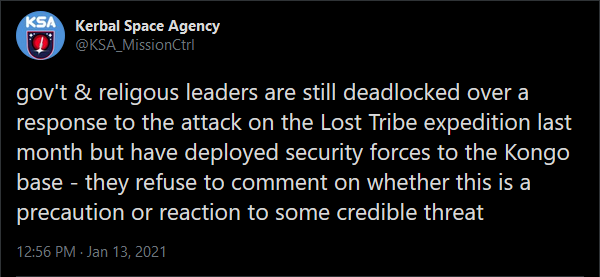
at this time we do not know the nature of the threat or the time frame, but given that we have suffered an attack in the past (kerbalspace.agency/?p=9965) we have no choice but to take this seriously & deal with the relatively minor inconvenience compared to a potential loss of life
🔄 0
❤️ 2
Kerbal Space Agency
@KSA_MissionCtrl
@KSA_MissionCtrl
there is also now apparently a threat against KSC and we have complied with orders from the government security forces earlier today that the entire facility be evacuated. We will continue to operate at limited capacity from our HQ in Umbarg until the threat has passed
🔄 0
❤️ 2
Kerbal Space Agency
@KSA_MissionCtrl
@KSA_MissionCtrl
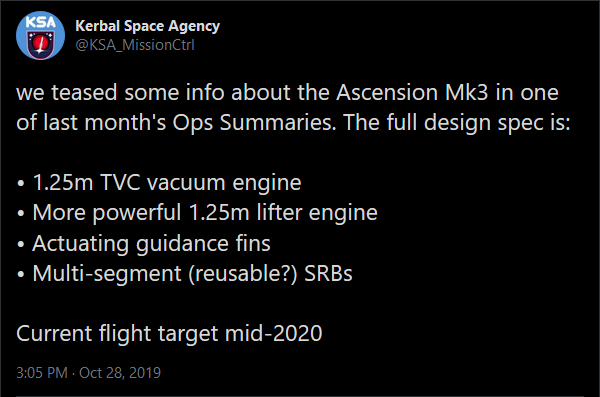
the original plan to develop a 1.25m TVC vacuum engine was put on hold to instead work on the 1m vac engine suitable for payloads and also because our experience with the Progeny Mk7 made us want to get more TVC engineering data from the Mk8 for a fully TVC Ascension Mk4 by 2022

🔄 0
❤️ 4
Kerbal Space Agency
@KSA_MissionCtrl
@KSA_MissionCtrl
in putting together the Ascension Mk3 mission report timeline (kerbalspace.agency/?p=11619), since it is the first, we go all the way back thru the rocket’s development as well. That reminded us of this tweet outlining the Mk3’s design goals. What happened to the TVC vacuum engine?
🔄 0
❤️ 0
Kerbal Space Agency
@KSA_MissionCtrl
@KSA_MissionCtrl
the Viklun stage & Kerbin III have been transported via rail back to KSC after arriving in port at Umbarg on Sunday. We still have to confirm that Kerbin III remains fit for flight but visual inspection looks good. Entire Viklun stage will need to be rebuilt but that was expected
🔄 0
❤️ 0
Kerbal Space Agency
@KSA_MissionCtrl
@KSA_MissionCtrl
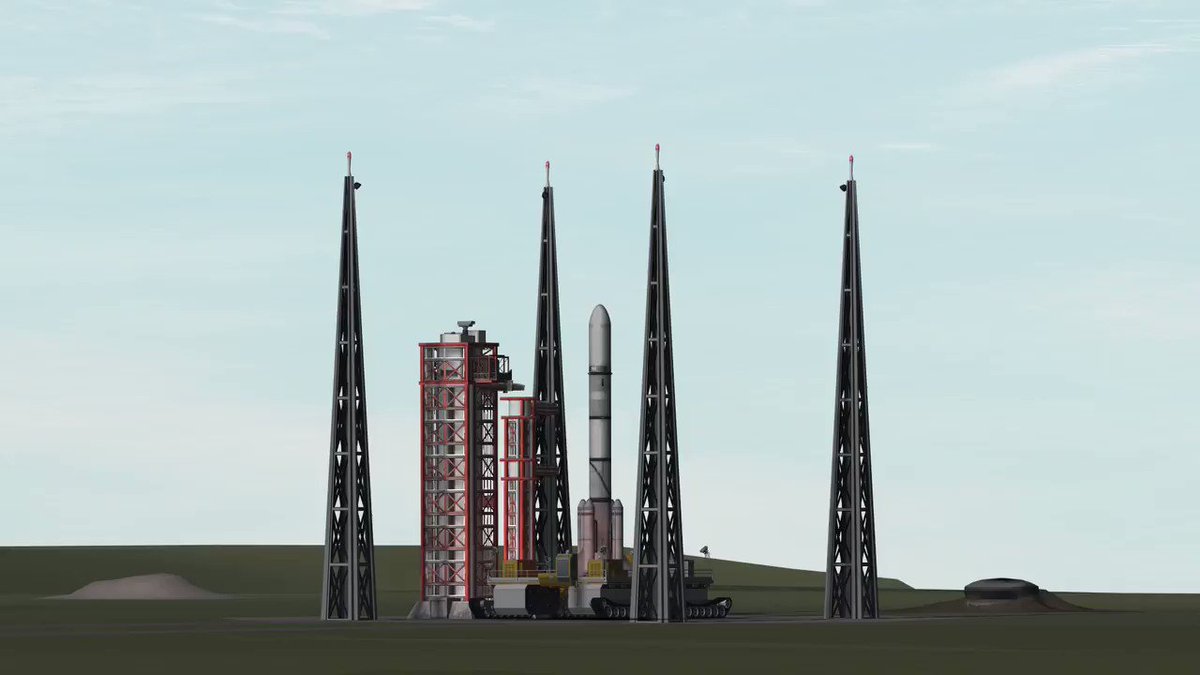
we are working on a full launch video but here is a look at initial ascent and booster drop from the ground tracking cam atop the Tracking Station & cam atop the crew tower. Bonus to upper-stage recovery is that we will get high FPS video from the booster camera for once!
🔄 0
❤️ 6
Kerbal Space Agency
@KSA_MissionCtrl
@KSA_MissionCtrl
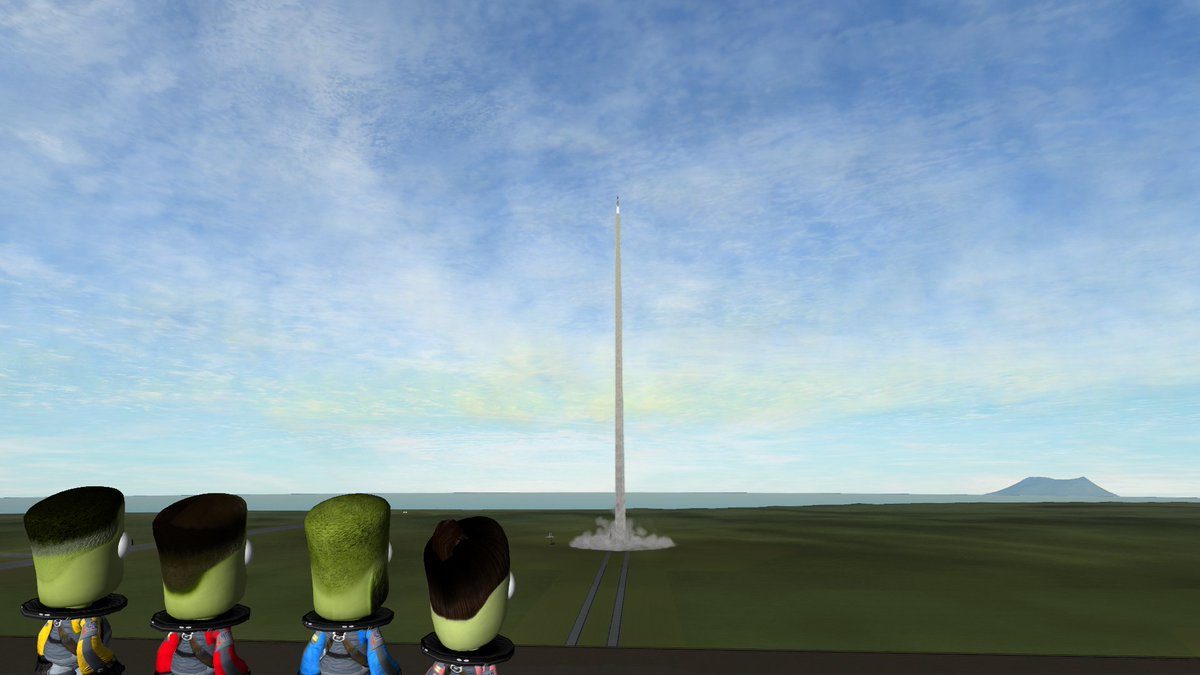
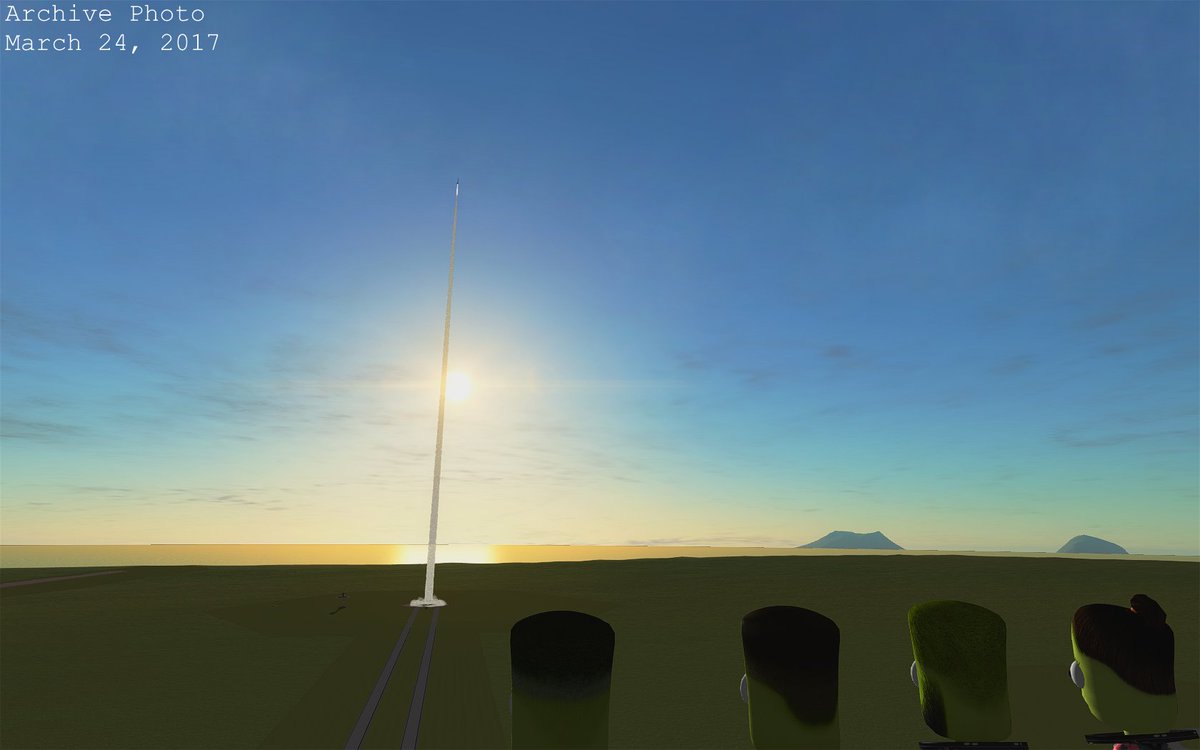
our crew did not miss the launch and are excited to one day ride this rocket up into orbit. Several years ago they didn’t know for sure if they’d even get to take a ride up into space yet! The final frontier is broadening bit by bit…
🔄 0
❤️ 3
Kerbal Space Agency
@KSA_MissionCtrl
@KSA_MissionCtrl
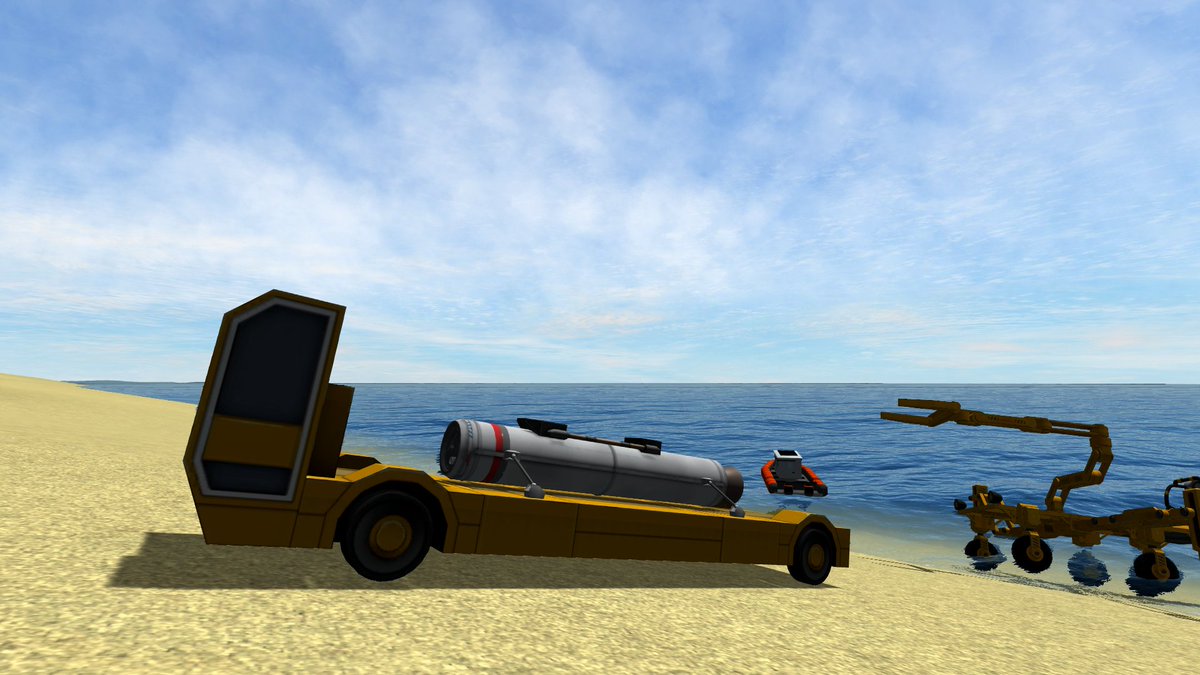
post-launch operations wrapping up with the final booster heading back to the VAB where it will be inspected with the others before being shipped back to Periapsis Co. in Umbarg for refurbishment. Rocket should be back at KSC by Tuesday
🔄 0
❤️ 2