Jan 02 2017

First Contract Signed for Genesis Program

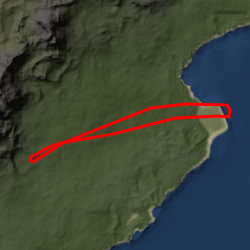
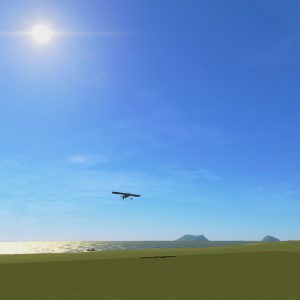
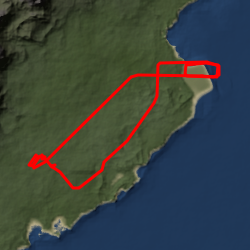
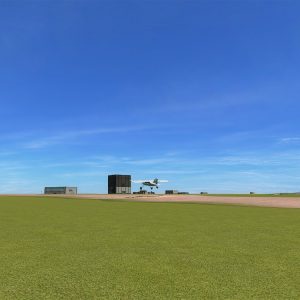
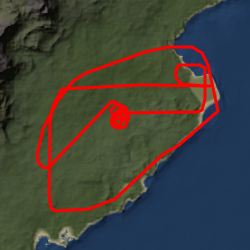
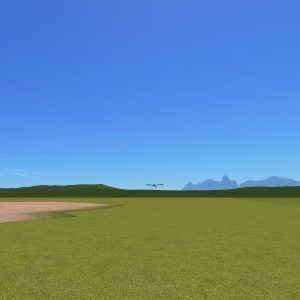
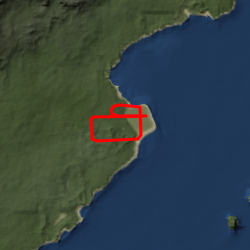
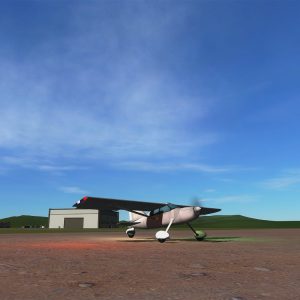
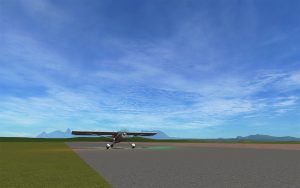
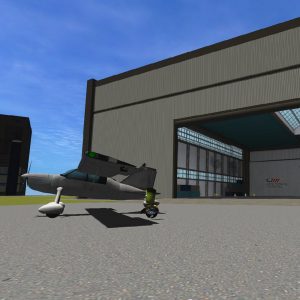
This week we started off the new year by accepting a contract from Probodobodyne, who heard about our recent success with fixed-wing aviation and was impressed at how relatively cheaply we’ve managed to turn around flights in the Civvie, which only requires a top off of fuel, not fuel and gas. While the Civvie is not yet much faster than airships, the cost savings were enough to interest agencies looking for crewed observational data of various regions near KSC that are will within the range of the Civvie.

The drawback of a single crew member aboard has meant that we can’t charge much – the pilot has to fly the aircraft first and performing observations adds to their workload in the cockpit and thus their reports are not as detailed as if they were aboard a more stationary platform like an airship. Furthermore due to the craft’s natural tendency to want to fall out of the sky upon engine failure rather than stay aloft, we can’t allow the Civvie to travel far out over the open water where it couldn’t glide back close to or over land in the event of trouble. So there are still trade-offs. But it seems agencies are willing to support the idea of fixed-wing aircraft by handing us small contracts, and it will certainly help bring the Genesis Program towards an eventual profit.

As with expenses, all profits from contracts and collected science will be split 50/50 with our partners C7 Aerospace Division. The first observational flight will be undertaken today by Commander Valentina.
Dec 23 2016

Operations Summary – Week of 12/19/16

View post on imgur.com

View operations details »

Dec 22 2016

Civvie Flight Trial 7

Captain Jebediah takes one more flight – for science! He’s headed out to the Mountains to attempt to transmit science data back to the KSC

View full tweet timeline »

Dec 22 2016

Civvie Flight Trial 6

Captain Jebediah is back in the pilot seat to make his own attempt at landing without a chute – via an approach over the water no less!

View full tweet timeline »

Dec 21 2016

Civvie Flight Trial 5

Now that landing is mostly proven, Commander Valentina will dedicate some flight time to climb to max altitude & perform stall maneuvers

View full tweet timeline »

Dec 21 2016

Civvie Flight Trial 4

The time has come, Commander Valentina will attempt to land the Civvie on the runway without using its recovery chute

View full tweet timeline »

Dec 21 2016

Civvie Flight Trial 3

Although Captain Jebediah came close, Commander Valentina is the one with the experience & we’re hoping she can put the Civvie back down on the runway with chute assistance

View full tweet timeline »

Dec 20 2016

Low-Altitude Science Survey 8

The last KerBalloon mission of 2016 collected temperature data in flight below 18,200 meters near Jorsey’s Passage for RealChute

View full tweet timeline »

Dec 20 2016

Civvie Ground Trial 3

Commander Val checks out the Civvie’s behavior taxiing in high crosswinds to get an idea of what it can handle

View full tweet timeline »

Dec 20 2016

Progeny Mk2.1 Flight Analysis

The main goal of the Progeny Mk2.1, our first multi-booster rocket, was to see what would happen to the apokee of the payload based on the timing of the second stage ignition. To do this we setup 3 launch profiles with ignition at early coast, late coast and plans for a mid-coast ignition time that would depend upon results of the first two launches. All three launches were successful and we have now analyzed all the data that was gathered.

The first flight ignited its second-stage booster just prior to the burnout of the first stage. This was not only done as part of the overall plan discussed in the previous paragraph but to see if the first stage booster would explode due to the heat of the second stage ignition. The failure of the first stage booster to overheat and explode has made it clearer that the explosion from the Progeny Mk2 was caused mainly by the impact of the boosters. This first flight of the Mk2.1 reached an apokee of only 2.8km, which is hardly impressive considering the Progeny Mk1-A with its single booster reached an apokee of just over 2km. The early staging boosted the speed of the rocket so fast while it was low in the atmosphere the dynamic pressure was as high as 72kPa. The thicker air also caused much more tumble of the payload (seen in the scatter of the AoA plot on the graph at the top of the telemetry report) upon separation from the second booster, which increased drag and lowered the apokee.

Read the rest of this entry »

Older posts «

» Newer posts