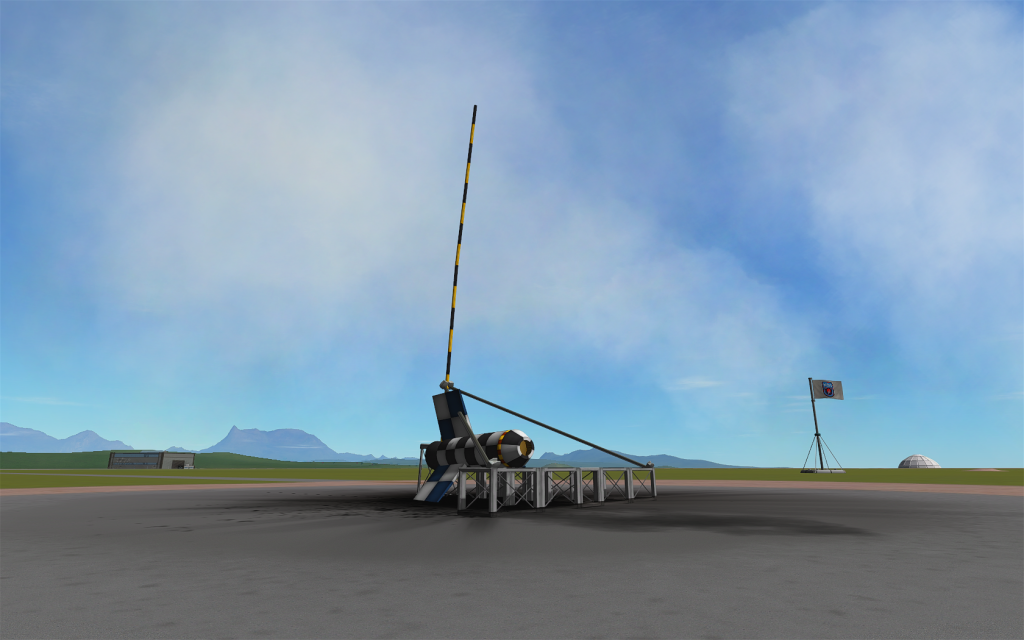
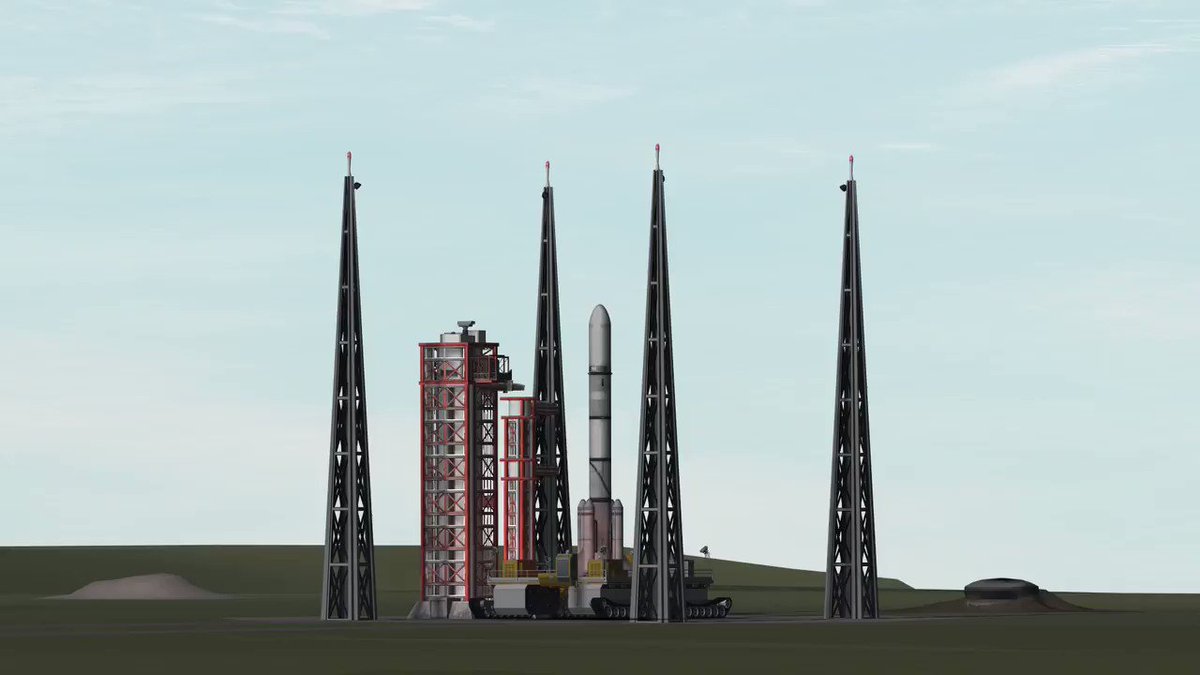
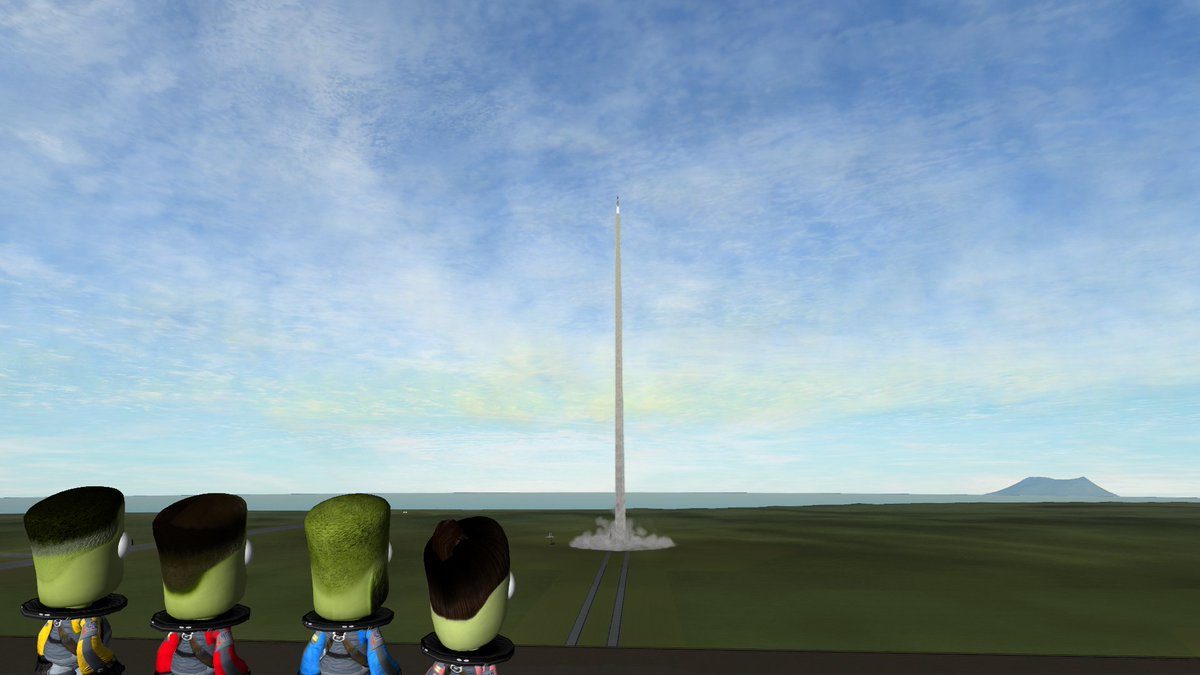
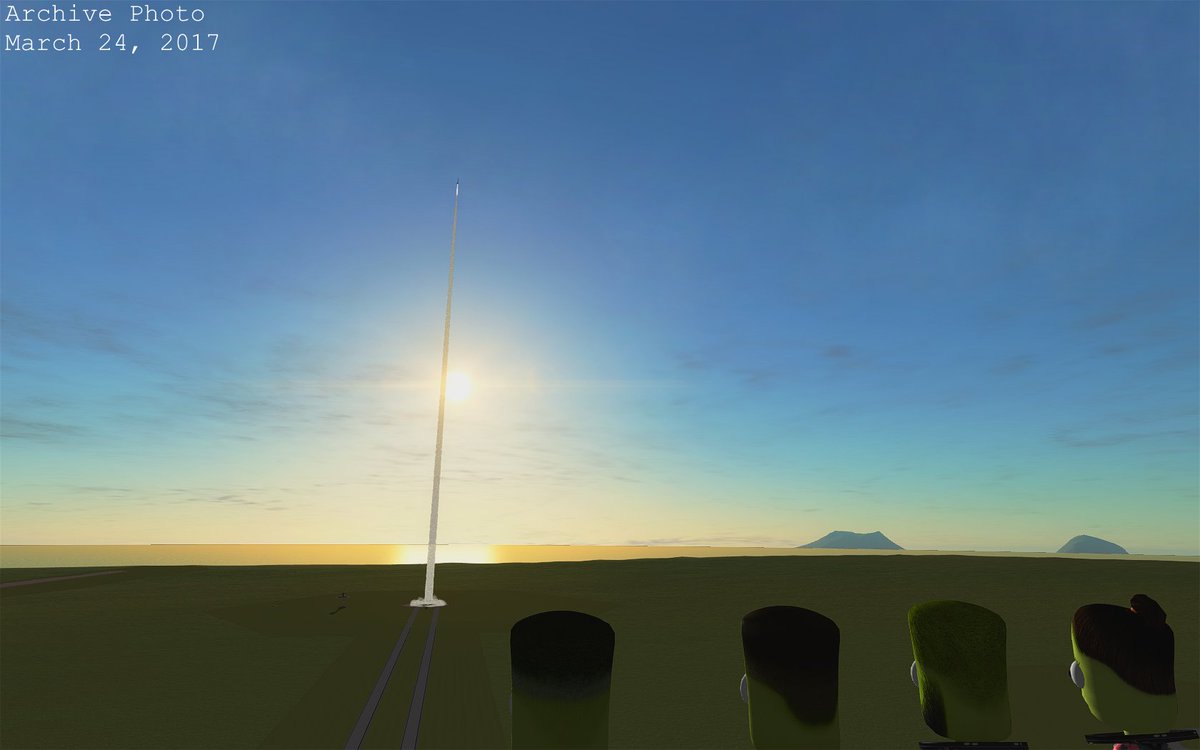
 After a full day cycle delay thanks to weather, the first Block I finally had a chance to liftoff after 4th sunrise, however it was beset by a failure of its first stage booster. The lack of ignition triggered a cascade of improper commands from the Automated Flight Control System which resulted in the premature deployment of the parachute, the second stage booster igniting and the rocket being carried almost 8km downrange to crash into the waters of the Kerblantic.
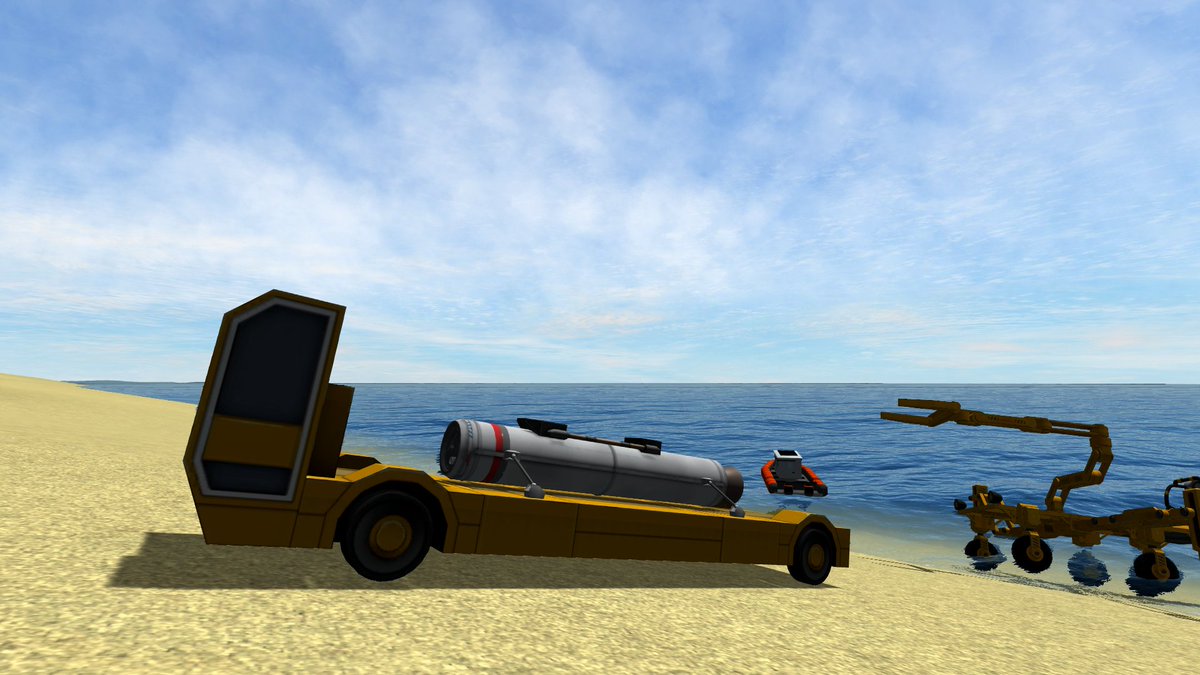
Today we investigated the first stage booster, which was left lying on the launchpad, in the VAB to determine whether it was a bad ignitor or a mis-fire that triggered the failure. A bad ignitor means that the spark that should have been created to light off the solid fuel burn was not generated due to manufacturing defects. Unfortunately there is no way to test for a bad ignitor before launch – as soon as you set it off to confirm it is working it becomes useless. The most you can do is ensure that an electrical signal is reaching the ignitor by running a small charge through the wires to establish continuity but not large enough (usually) to set it off. The launch team confirmed continuity during countdown. A mis-fire means the ignitor did generate the spark meant to ignite the solid fuel but the burn either did not initiate or was stopped prematurely. In the VAB it was confirmed that the ignitor was defective, which is good as it means we don’t need a new first stage booster, just a new ignitor.
Usually with a failure like this everything would have been fine – the rocket would have remained on the launch base and we probably would have tried again just to make sure the booster was really not able to fire. However we have suffered our first logic error via the AFCS. It’s easy to clean up syntax problems that generate errors when compiled but logic errors can usually only be found during actual execution.