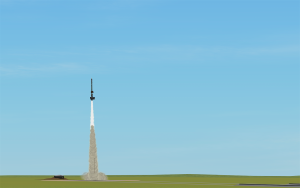
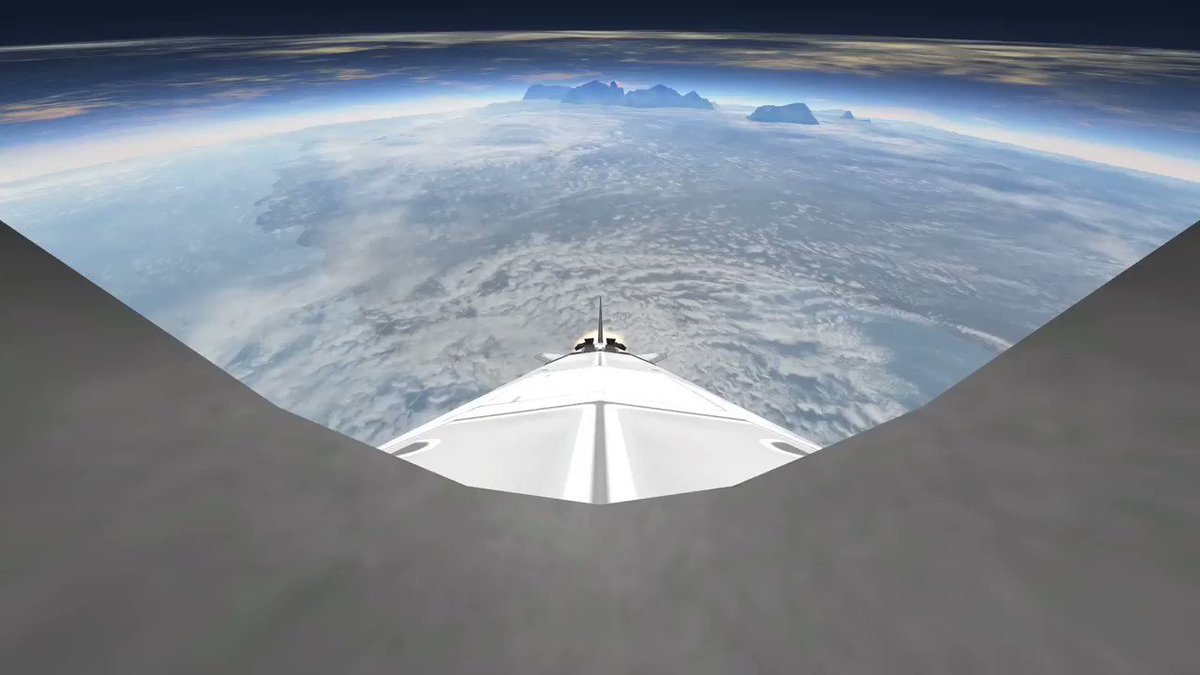
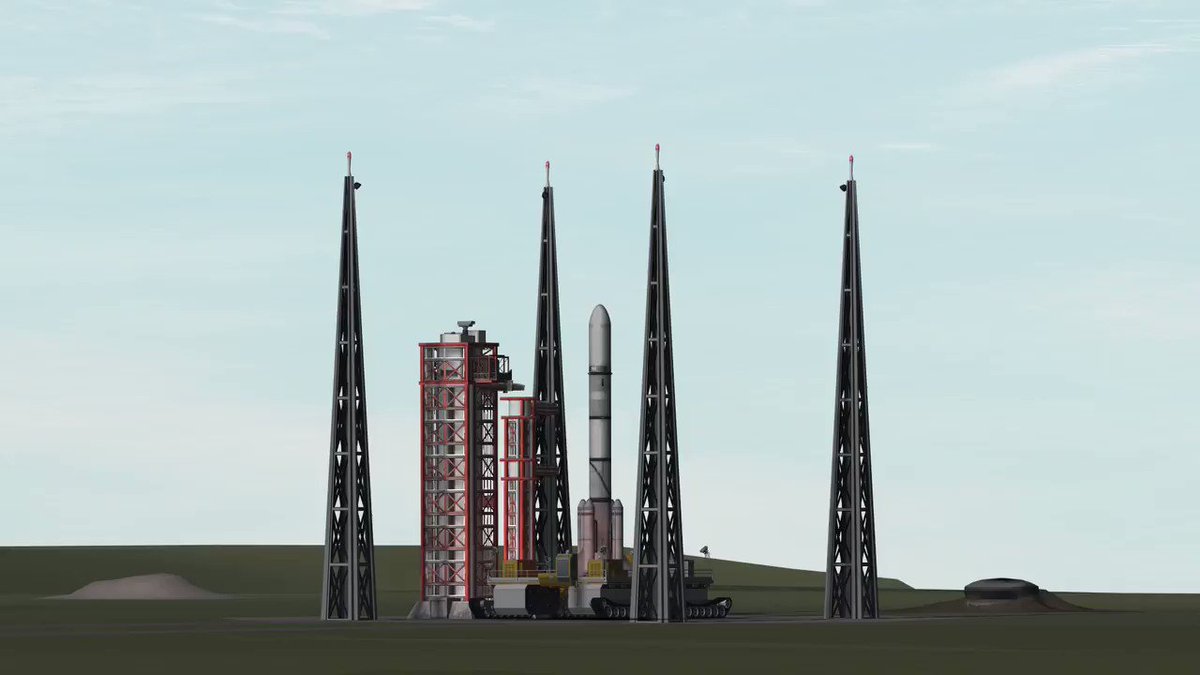
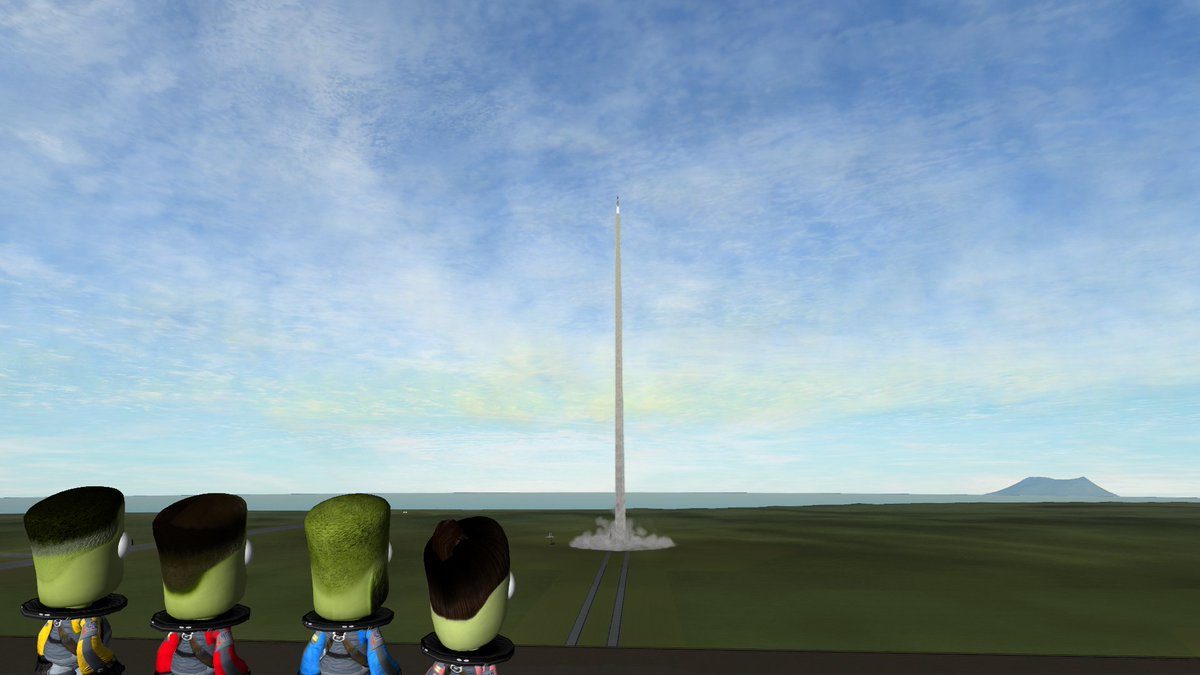
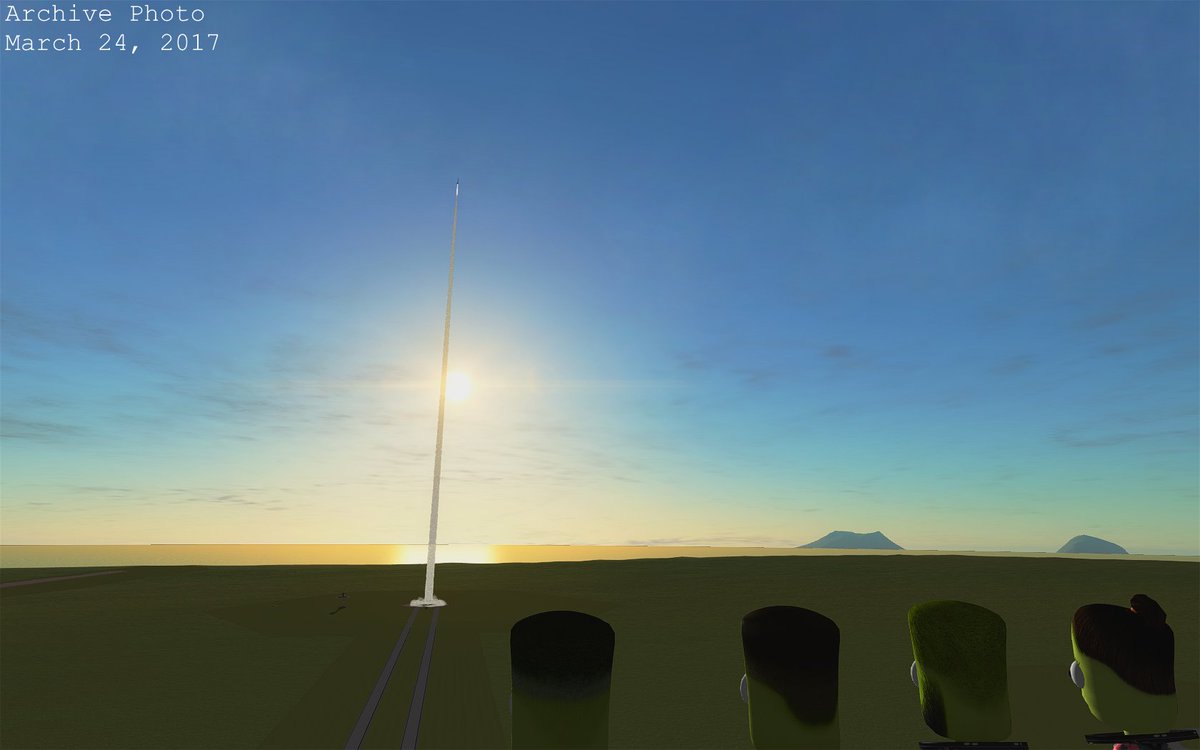
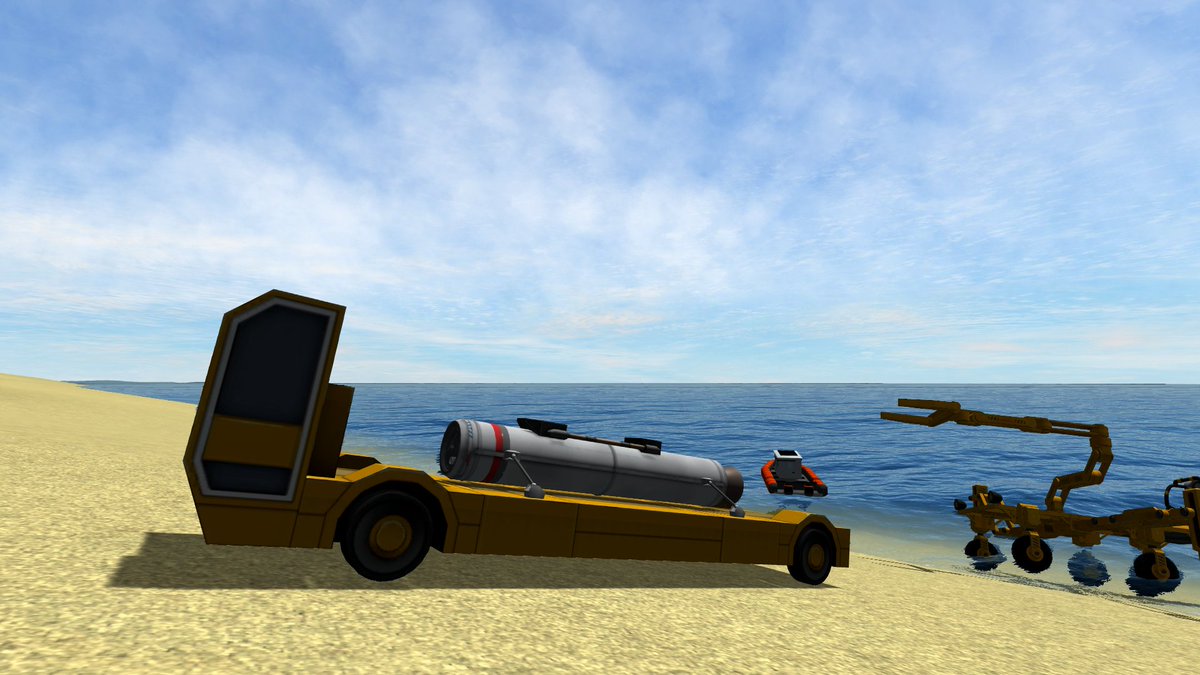
 Engineers on the Progenitor team have spent the past week carefully analyzing telemetry data not only for the most recent fourth flight of the Mk5 Block I but as well for the entire series of Block I flights. The second flight of the Block I especially was of interest given that it reached nearly the same height and followed a much different trajectory. As usual, we will take a look at the details of the fourth flight first and then move on to the comparative analysis that leads to decisions made for the future of the Progeny rockets.
The Flight
After the numerous delays, the rocket lifted off from the launch pad at precisely 10:00:00.03 local time, soaring up into mostly-clear skies on its first stage 0.625m booster pumping out an initial thrust of 67.2kN for a TWR of 4.02. The nose pitched up only 1.4° before beginning to fall as the rocket tracked eastward away from the Kerbal Space Center. The first stage booster’s thrust profile began to reduce thrust 5 seconds after ignition, relieving stress on the rocket as it continued to climb and passed through a maximum dynamic pressure (MaxQ) of 77.371kPa at L+17.79 seconds. The booster thrust tailed off to just 17.3kN by the time propellant ran out at L+33.67 seconds at an altitude of 14.4km – it was decoupled cleanly one second later and the fins were shredded properly one second after that while the rest of the rocket coasted into the upper atmosphere.