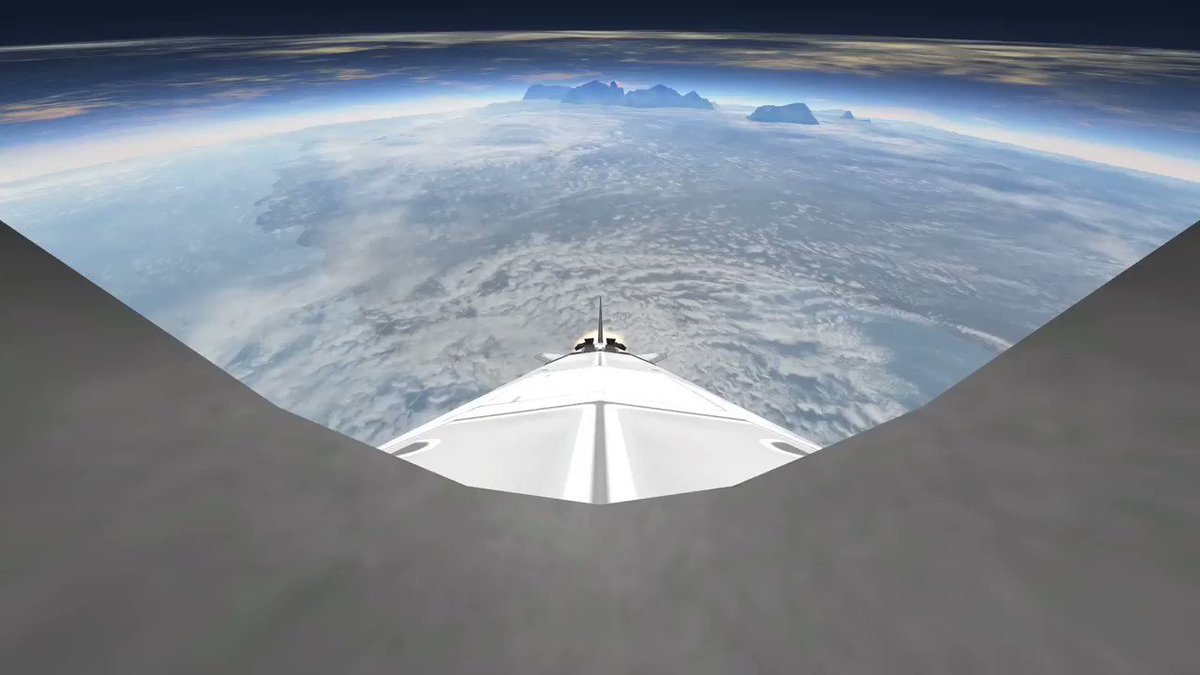
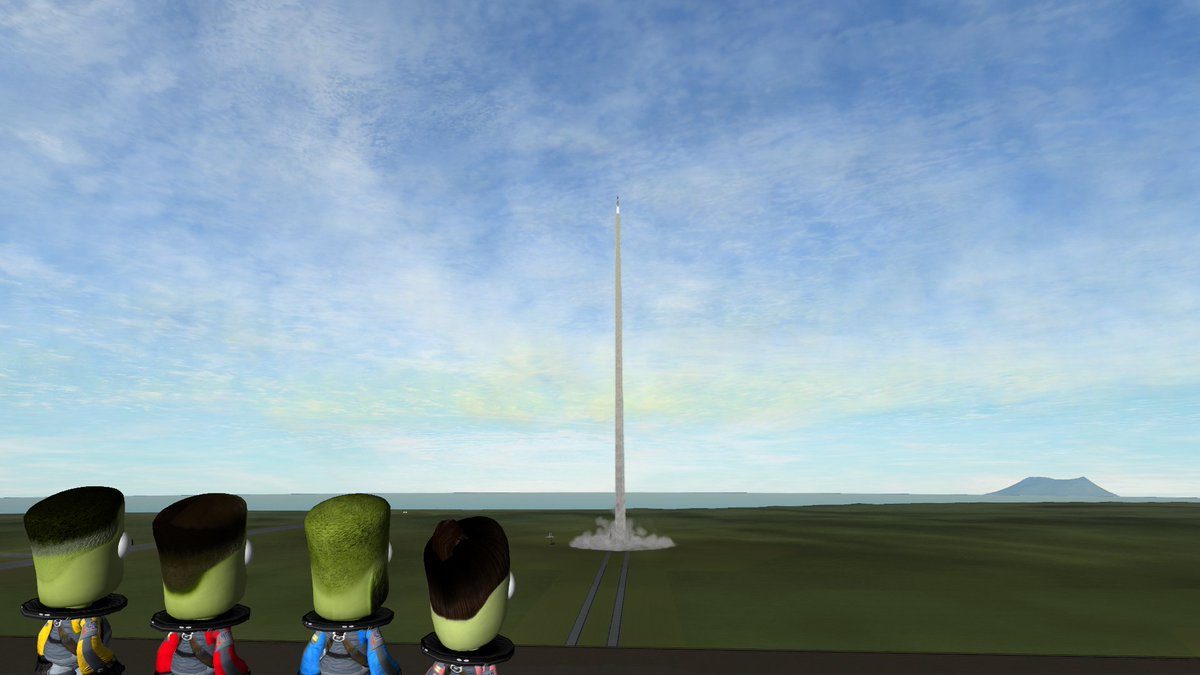
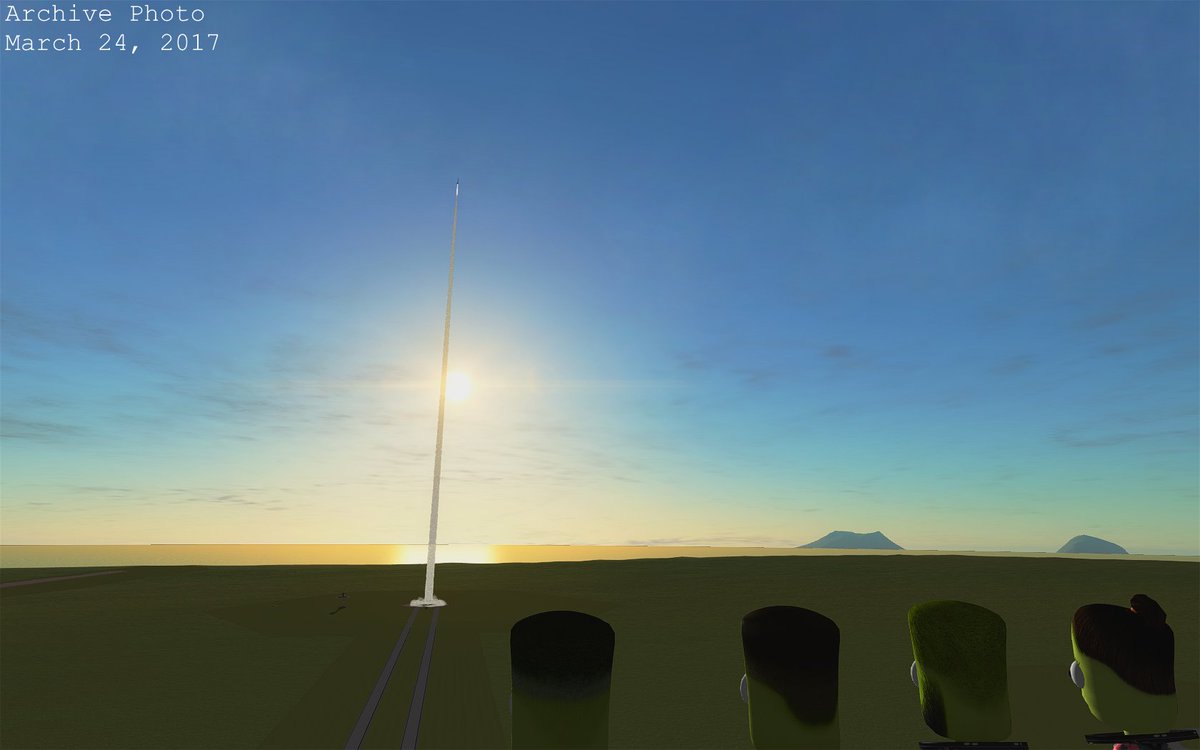
 Ever since the Block I outperformed all expectations and flew into the region of space we expected to use the Block II to reach, this rocket hasn’t been able to find a good use in our launch lineup which is why this is only the second launch since it was first conceived back in late 2017. The mission however was well-suited to our most powerful rocket to date, which was to go as far out into space as possible to gather new radiation data and look for a second radiation belt. In addition to building on the previous radiation discoveries, an additional mission goal was to test new hibernation technology to extend the vessel’s battery life long enough to last a mission that could take several hours.
The Flight
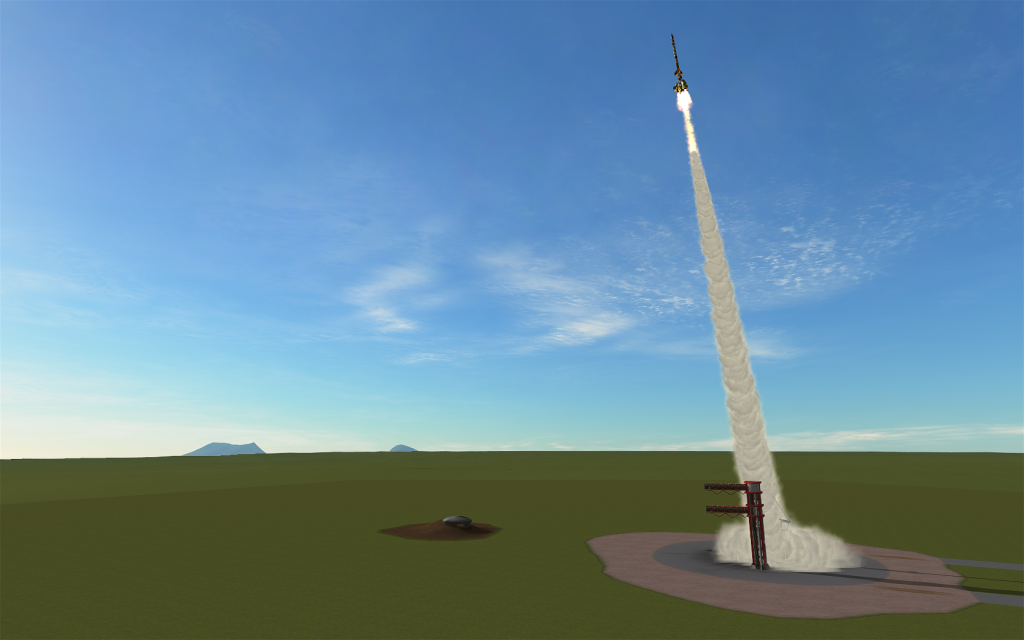
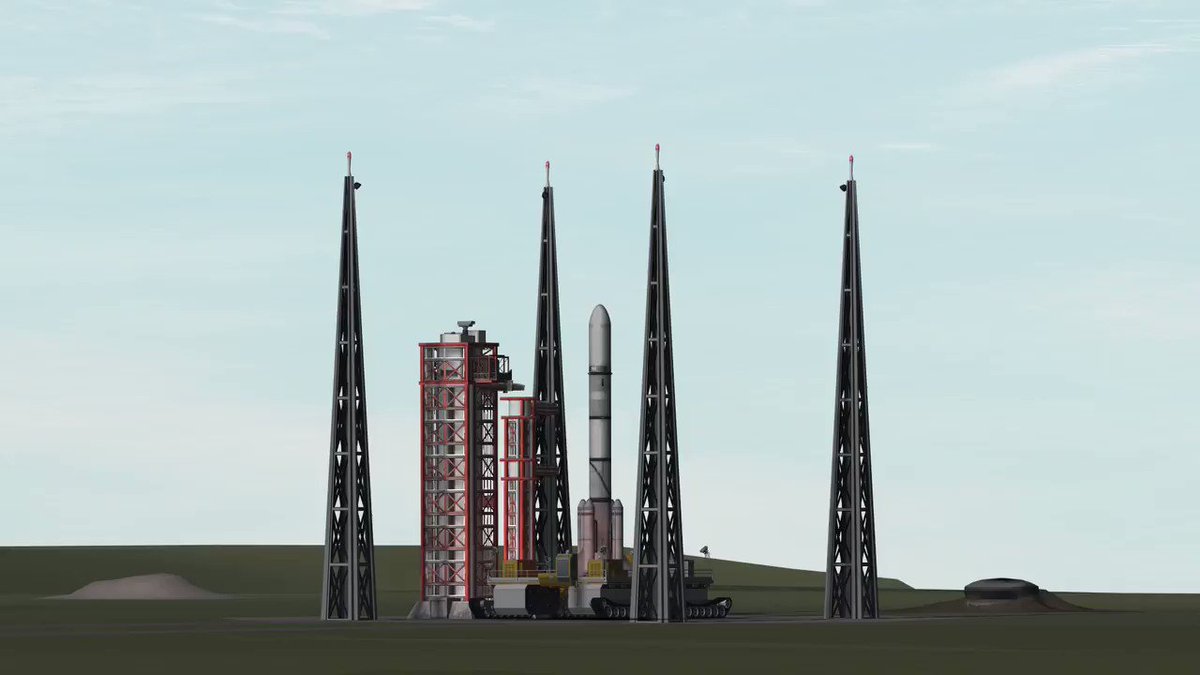
The rocket had a clean launch, leaving the mounting base without impacting the support rail while firing on all 5 solid rocket motors for a total initial thrust output of 214kN, producing just over 6Gs of force to keep it pointed downrange as the nose began to lower and the fixed fin angles began to spin the rocket up. The main difference between the Block II and Block I are the 4 radial boosters that accelerate the larger and heavier Block II rocket up to speeds comparable to a Block I. They burn from 5-6 seconds before being discarded. During the first flight, the booster separation led to an impact with two of the large lower fins thanks to the decouplers throwing them away with enough force to remain lateral to the rocket. The solution was simply to let them drop away on their own by force of the rocket’s speed and spin. All four boosters made a clean separation although the rocket exhaust did scatter them and actually flung one back far enough to impact the Ascension service towers! Thankfully no major damage was done.