Sep 23 2016

KSA Confirms Order for More KerBalloons

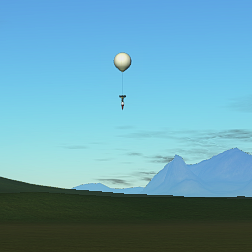
28782753162_dd064c9717_oFollowing the successful launch and recovery of a scientific payload lofted by a KerBalloon, the KSA has put in additional orders for further use in its program. KerBalloon says that it will take them several weeks to a month to begin rolling out new units as they want to take into account some feedback KSA engineers had. Development is also moving forward on envelope material that can expand further to contain the lifting gas at lower pressures for reaching higher altitudes.

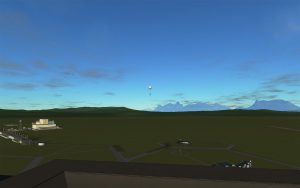
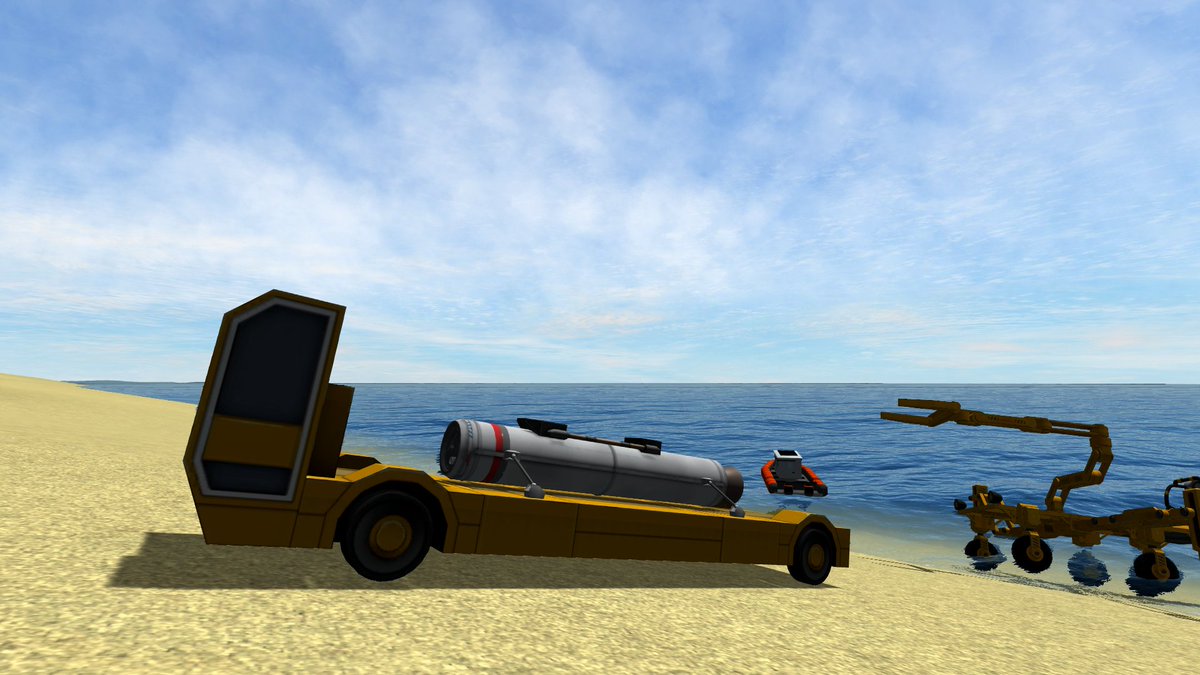
The payload carried on this first flight consisted of two atmospheric instrument packages designed and built by Umbra Space Industries, which returned with a total of 48 mits of stored data for analysis. The data was taken at 10 and 15km with the payload ultimately reaching a height of 16.531km after nearly 56 minutes – the current record for a kerbal-made object above the surface of Kerbin. During the ascent the lowering external air pressure caused the envelope to expand to over 3x its size at launch (shown at left) until it burst as planned. On the way down data shows the probe oriented itself in a position that produced some body lift and actually achieved a horizontal velocity of 112m/s. Its max total velocity during freefall was 193m/s and the payload survived a peak 14Gs of force when the chute was deployed at 500m above the ground. The 135kg payload landed at 3.8m/s and its parts can be re-used with the Progenitor program, much to the relief of Mortimer.

The ground path of the balloon shows that it traveled through various wind layers on its ascent causing it to meander slightly as it moved westward. Meteorologists are loving this data and can’t wait for more to begin to really understand the weather patterns that now drive Kerbin’s climate since the atmosphere stabilized after the asteroid impact. The science instruments carried aloft are in fact very much designed to help us better understand the new climate conditions that exist on Kerbin and future KerBalloon launches will take place not at KSC but at various points around Kerbin to begin to get a rough idea of global climate.
Sep 22 2016

Progeny Mk1-A Flight 2

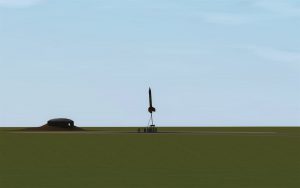
Our first launch was marred by a failed chute deployment. Can this second attempt return an intact payload?

View full tweet timeline »

Sep 22 2016

Progeny Mk1-A Flight 1

Our first rocket launch! Excitement mixed with a bit of fear – what will happen? A big explosion?

View full tweet timeline »

Sep 21 2016

Low-Altitude Test Flight

We get our first production sample from KerBalloon and see how it handles an ascent to max altitude of 16.5km and back to the ground

View full tweet timeline »

Sep 19 2016

First KSC Rocket Launch Scheduled with Progenitor Program

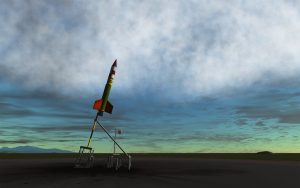
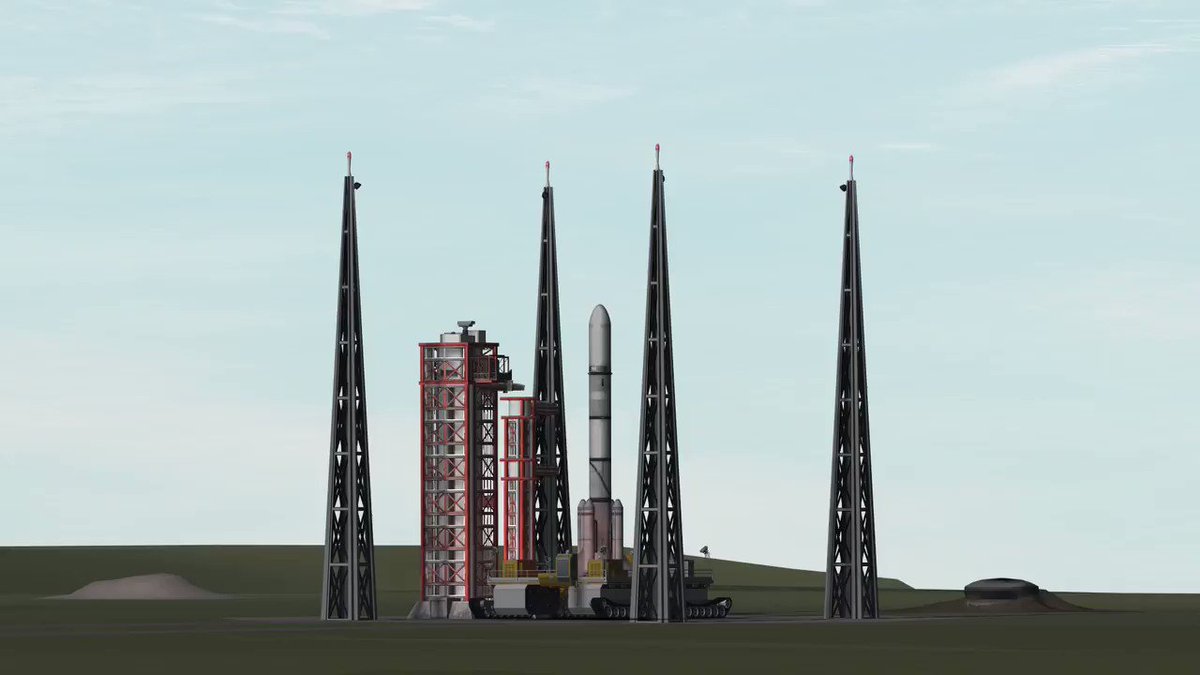
Progeny Mk1-AToday saw the successful integration testing of the first fully-assembled Progeny Mk1-A rocket. After two days of assembly the team spent another full day carefully checking all systems and wiring and structural connections to ensure the rocket was ready to fly. Now that Lead Engineer Simon and his work crew have the procedures nailed down, they can assemble future Progeny Mk1-A rockets at a slightly faster pace. They expect a second rocket to be ready to launch on Thursday after the first one with a slight change to its configuration: the fins will not be angled to spin-stabilize the rocket on ascent.

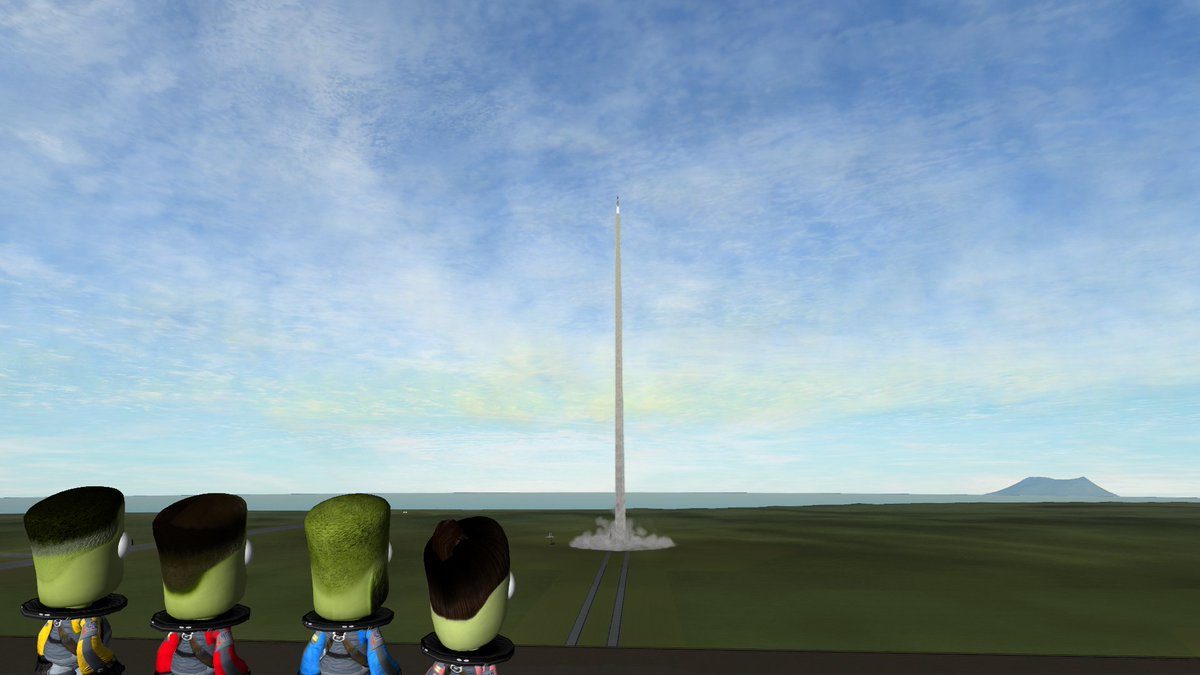
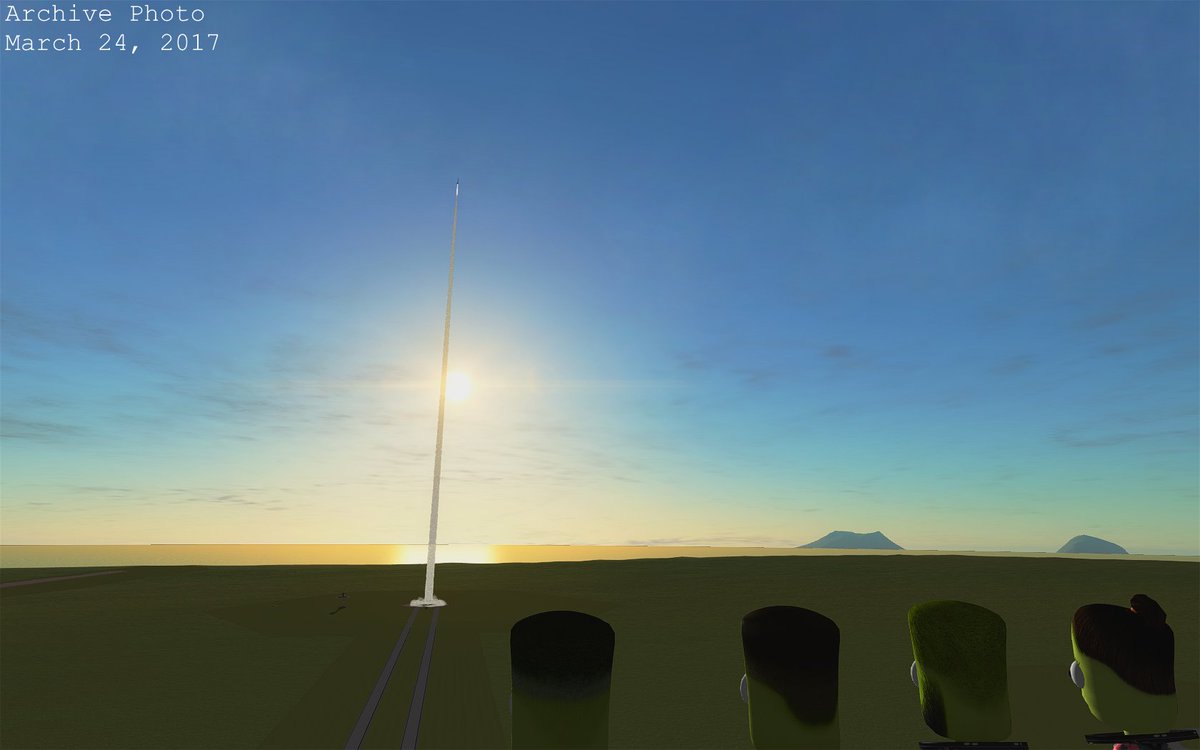
The first rocket will launch after second sunrise at 15:30 UTC. Assuming there is no catastrophic failure, the second rocket will be launched after third sunrise at 21:30 UTC. Following both flights will come at least a week of data analysis and further simulation, during which time Simon and his crew will work to assemble and make ready two Progeny Mk1-B rockets for similar flights the following week.

Sep 19 2016

KSA Forms Partnership with KerBalloons for Atmospheric Research

KerBalloonsFlagThis week the KSA signed a deal with KerBalloons that has been formulating for the past few months prior to the start of operations at KSC. The balloons manufactured by KerBalloons will provide the Agency with a low-cost platform from which to deploy science instruments for both research and testing. Even the engineering department at KSC has expressed interest in using the balloons to test part crash tolerances from large heights (“way better than lugging things to the top of the VAB and chucking them off. Safer too”, says Lead Engineer Simon Kerman).
The first balloon products to be received by the KSA are 0.625m units for testing the new manufacturing of smaller air envelopes, which has required a newer processing than is customary employed by the airship industry, which mainly produces large dirigible envelopes for cargo/passenger airships. Eventually KerBalloons expects its products to carry aloft larger and heavier payloads.

The first launch of a KerBalloon will take place this Wednesday ahead of a possible rocket launch on Thursday, carrying aloft two science packages that will later be deployed on a Progeny Mk2 rocket. The exact time is unknown, but expected to be around 2nd sunrise when winds are calmer and blowing off the sea to ensure recovery over land.

Sep 16 2016

Operations Summary – Week of 9/12/16

Images from the Week

View operations details »

Sep 14 2016

Progenitor Program Tests New Rocket Technology

Progeny Mk1-AProgeny Mk1-BThe Kerbal Space Agency is proud to kick off its first day of official operations with the announcement of the Progenitor program, which will launch a series of small rockets to test various aspects of this new field of engineering and science. The first two craft to be launched will be the Progeny Mk1-A and B designs, which will each comprise a series of up to 5 flights. An onboard telemetry data unit will gather measurements of the rockets performance during flight and each successive launch will be adjusted accordingly to tweak performance. Currently there are plans for as many as 2 or 3 launches per day.

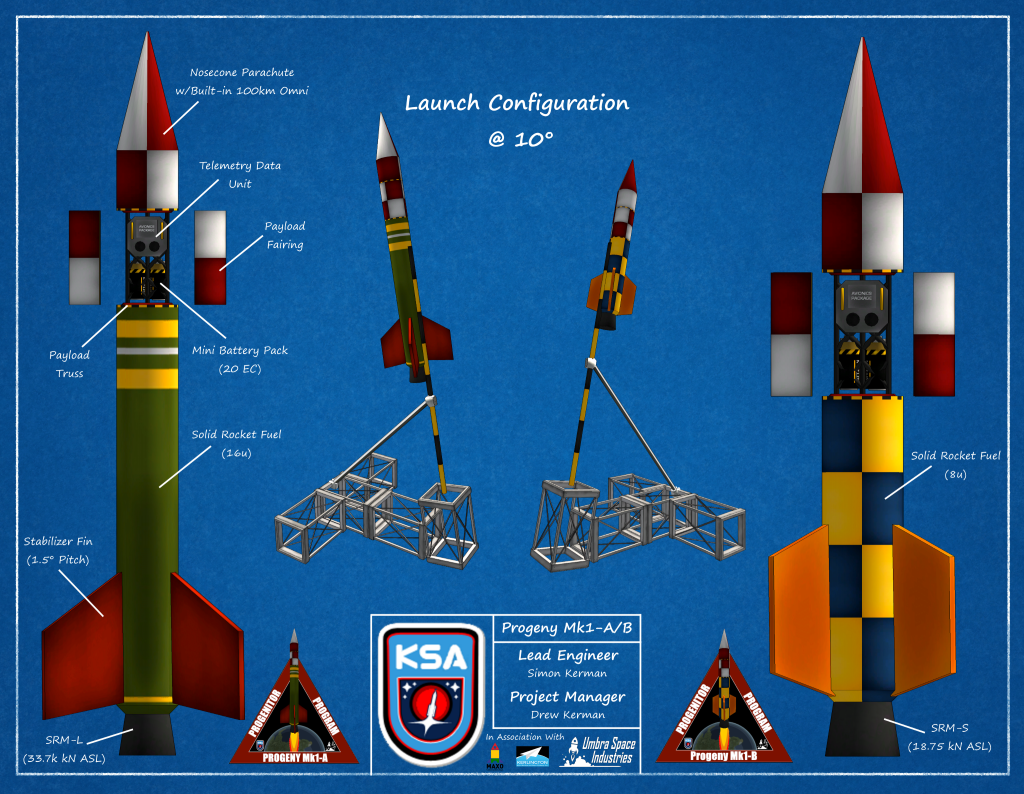
UPDATE: Final approval has come through and we are proud to show the final blueprints for the Progeny Mk1 craft!

Progeny Mk1-AB smThe parts have already been ordered from USI and delivered weeks ago pending final design, now the assembly process can begin tomorrow as the VAB gets its first construction job. Simon and his work crews are looking forward to the assembly and we will be sure to keep you all updated on its progress. At this time the first set of launches for the Mk1-A are expected to take place no earlier than next Monday.

Aug 15 2016

KSA Operations Set to Begin Sept 13th

After over two years of construction the first surface structures in years are at last finished and standing tall on the shores of the Kerblantic ocean. Several months behind schedule, the Kerbal Space Center will not only be the gateway back to the surface of Kerbin but eventually a gateway to the stars themselves. KSA Operations Director Drew Kerman led the ribbon cutting earlier today that marked the completion of the main administration complex, the last section of KSC to be built. “We have a long road ahead of us, but while the final destination is so distant as to be hardly visible, our sight on it will never waver and our arrival will mark a new era for all kerbalkind”.

The mad rush of moving in equipment and supplies has already begun, and barring any further delays the Agency plans to begin full operations starting in the month of September. During construction the various engineers and scientists hired by the KSA have already been busy working remotely and the KSA will be hitting the ground running with initial rocket designs set to be finalized by the start of the month.

You can learn more details on the KSA, Kerbin’s history, KSA staff, terminology, KSC facilities and more on our About page.

» Newer posts