Tag Archive: ascensionmk2-1

Mar 25 2020

Ascension and Progenitor Programs Suspending Operations

Today I made the decision to suspend our rocketry programs for a full review and reassessment on all levels (design, administration, operations, vehicle integration, etc) over the next two months, at least. This move is especially difficult because we started this year out so strong, putting a probe into orbit and once again sending a kerbal up into space after a 5 month hiatus of crewed flight. This month we were also due to launch the first Progeny Mk7-B rocket and begin testing booster recovery and re-use. However despite the increasing momentum we seem to be surpassing our capacity to manage the increasing complexity of our missions and run the risk of compromising safety.

Initial review of the recent kerbed mission has found out why the rocket did not travel as high as planned – it was 53kg heavier than expected. We don’t have a scale that can measure a rocket after it’s been fully assembled. We know the mass of a rocket because we know the mass of all the individual parts plus the mass of the fuels and the mass of the crew. At some point in this mission improper mass figures were given to the mission design team, or proper ones were given but then failed to be updated when changes were made to the rocket’s assembly. We’re still working down the fault chain to identify all the reasons why this mass discrepancy occurred.

Although this was a relatively minor mistake that did not lead to any actual issues with the mission itself, ignoring it could lead to larger mistakes that in turn lead to disastrous consequences. I don’t feel that it is enough to recognize the issue and say “we’ll get it fixed” as we also continue to move on with operations that may already be compromised. Shutting everything down will allow us to go back to missions and vessels already in progress of being deployed to ensure that they are properly put together.

This decision is also influenced by the recent shut down of the Genesis program, which allowed us to identify and rectify numerous issues that had creeped their way into the program over the years. While we haven’t yet lost a pilot in Genesis due to maintenance or operational errors, there have been numerous close calls and the margins for crewed rocket flight are even tighter, not to mention how much more expensive it is to lose a rocket and unkerbed payload in flight.

This shut down will affect launches and construction only at this time. Engine testing on our static stands will continue and Wernher von Kerman’s team over at R&D also remain unaffected, so some things will continue to move forward. The Progeny Mk7-B that was recently assembled will receive another thorough inspection, mission plans for it and future Mk7-B flights will undergo full reviews. The recent Ascension Mk1 flight will continue to be analyzed and a report published. The upcoming Ascension Mk1 and Mk2 missions are all undergoing the same review scrutiny and we will also be taking another look at what we need to accomplish between now and the late-2021 launch of the first Extremis mission. Crew training will be suspended so our astronauts can be involved in the review aspects oriented towards their mission preparations – we expect training exercises to resume prior to the operational suspension being lifted.

Lead Engineer Simon and Flight Director Lanalye are both in agreement with me on this decision and we are confident that this will work to ensure we finish this year as strong as we started.

– Drew Kerman
Founder, Operations Director
Mar 19 2020

Ascension Mk2 Flight 1 Analysis

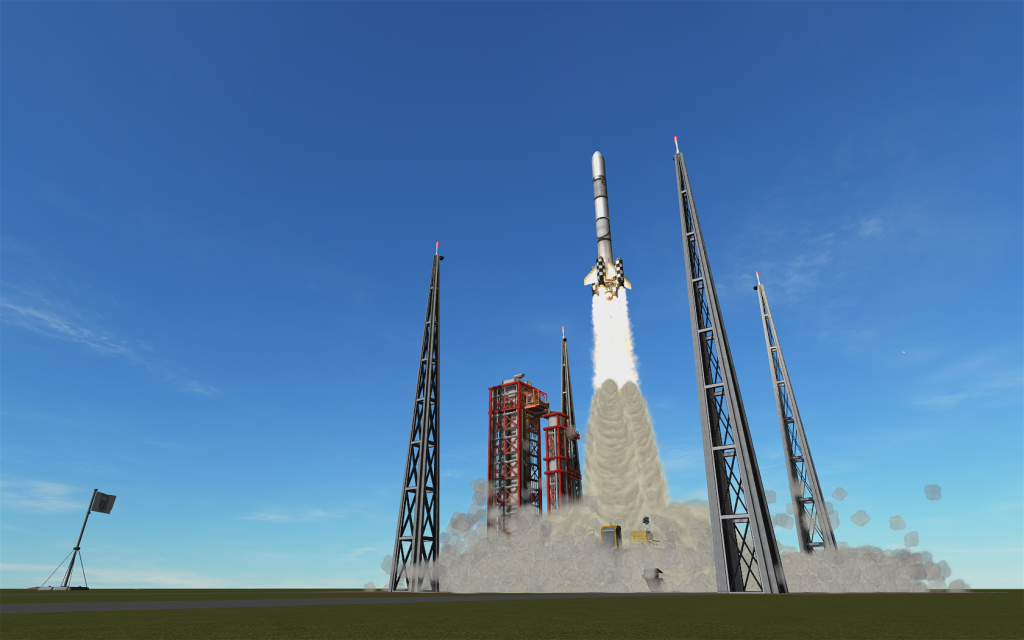
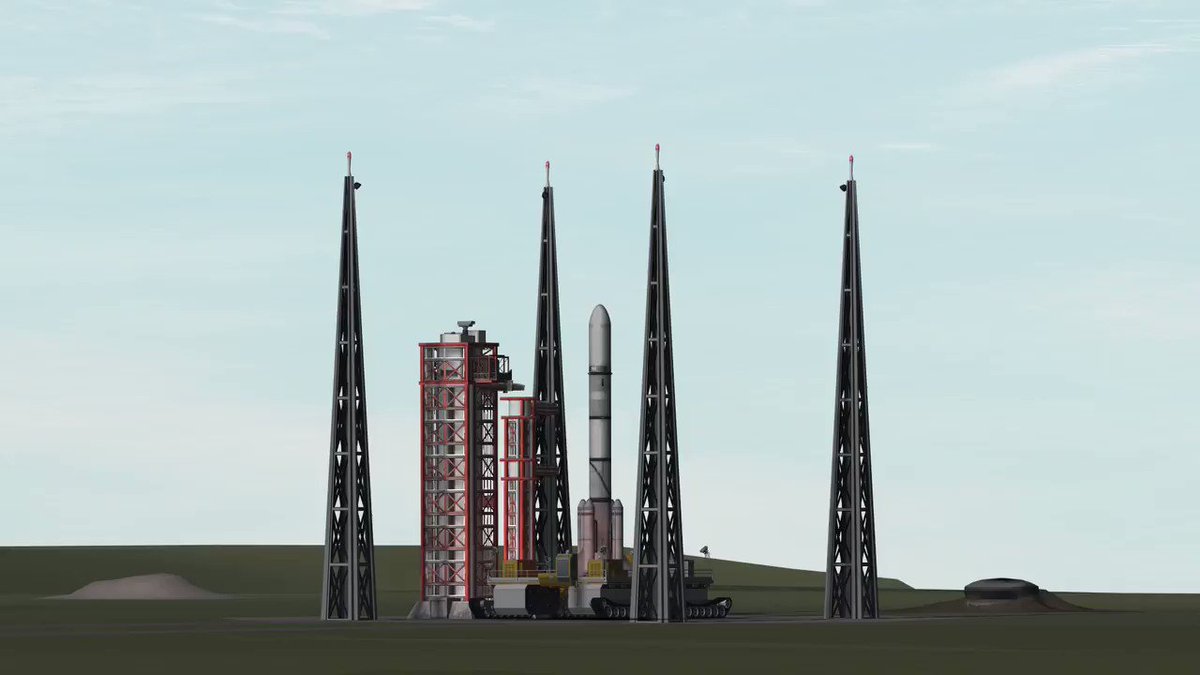
Originally introduced as the Ascension Mk1 Block II back in March 2018, this rocket was meant to be the heavy-lift variant to the orbital Block I, using as many as 4 solid rocket motors to help it get going off the pad with larger payloads. Eventually however as the Block I showed it didn’t have the power to reach orbit the Block II was shelved and the following year brought back as the Mk2 with the addition of the Viklun upper stage. The rocket was originally set to fly in late 2019 until doubts began to creep in about the performance of the new guidance fins in being able to turn the rocket over enough for a shallow orbital ascent. A test flight with the Mk1 was set for the end of the year instead but that was forced back into early 2020 when the KSC was attacked and the launch pad damaged. All this and more details can be reviewed in the mission timeline, which includes tweets dating back to the Ascension program’s inception in 2017. Having over two years to prepare for the launch of this rocket, very little issues were had in the final lead-up to its mission. The rocket was rolled out atop the Mobile Launch Platform and all three service towers were finally used, with the lower booms providing fuel to the two stages and the crew access extension giving power to the Viklun and Kerbin I probe cores. The 1.25m computer core of the Viklun stage is the first of its size and would guide the rocket during ascent using its extra space to hold two discrete CPUs for cross-check and redundancy.

The Flight

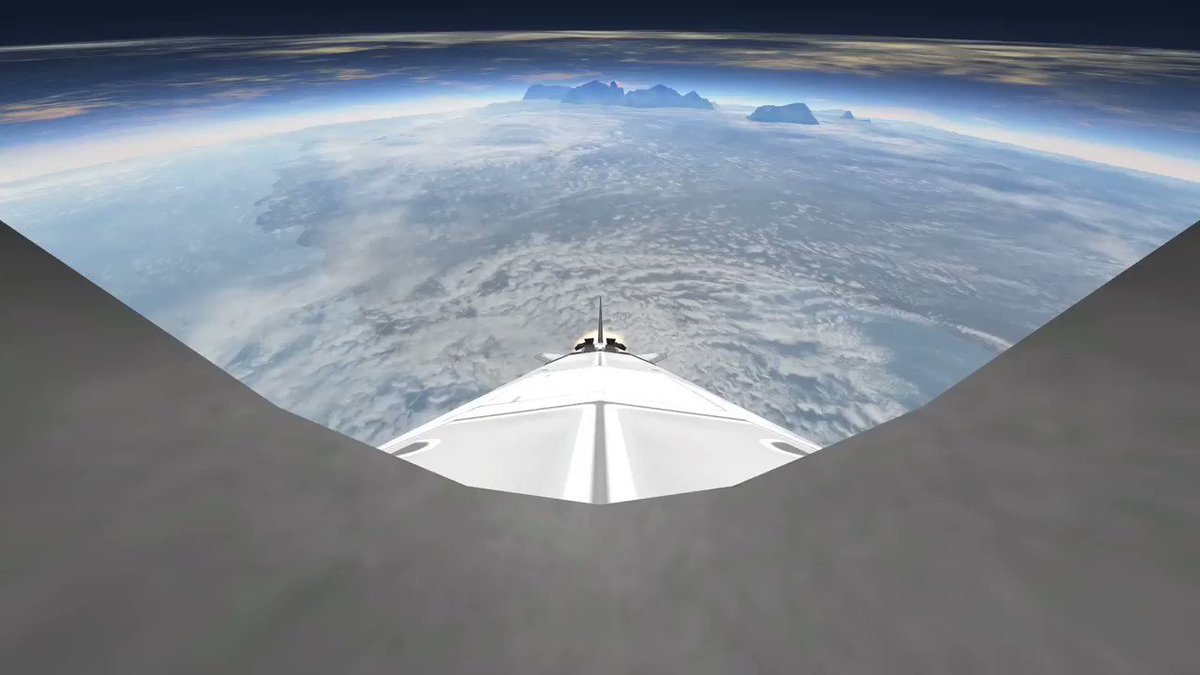
Although no issues presented themselves during pre-flight a hold from the weather desk was called during the L-5min final general polling due to upper-level winds being outside launch commit limits. We had to be more careful than usual with upper-level conditions because of the large interstage in this rocket that could literally see it ripped in two if the upper stage strikes heavy winds going in one direction while the lower stage experiences winds in a different direction, an event known as shear. While the winds appeared to be trending downwards in the data received from the weather balloon, we couldn’t be sure whether it would continue. Having the entire daylight window available to us however a second balloon was launched to find out.

Read the rest of this entry »

Feb 20 2020

Ascension Mk2 Flight 1 (Kerbin I – Orbit Attempt 3)

Our largest rocket to date finally gets its chance to help us prove that we are capable of achieving orbital space flight. We’ve spent the last year working up towards this mission but are we really ready? Only one way to find out…

View full tweet timeline »

Feb 14 2020

Operations Summary – Week of 2/10/20

View post on imgur.com

View operations details »

Jan 13 2020

2020 Program Goals

Over the entire last week, as is per usual for the start of the operational year, numerous meetings were conducted among the various programs here at KSC where all team members were allowed to pitch ideas and voice opinions about the coming year so admin staff could work on decisions for 2020 operational goals. Thankfully all arguments remained professional – no chairs were thrown or whiteboards defaced. Here is all that we hope to accomplish this year.

Ascension Program

Still the most exciting aspect of our operations, Ascension will seek to travel higher and further than ever before starting right this month with the latest Mk1 mission to test out new guidance fins (larger versions of those that flew first on the Progeny Mk7-A) as well as attempt another RTG impact test. More details on the mission will be posted later this week when we announce a launch date. The Mk1 will also fly at least two more times this year to send Captain Jeb and Specialist Bob into space on sub-orbital missions to continue to observe the effects of zero-G on kerbals, as well as tolerance to re-entry forces.

The first flight of the Mk2, as early as February, will be entirely dependent on the performance of this month’s Mk1 mission. If successful, the new fins should give the Mk2 the control authority required to pitch over fast enough to achieve orbit. From the first mission we will aim to deploy a satellite, Kerbin I, which was announced last year. It will allow us to conduct various tests before being de-orbited due to limited battery power. The Mk2 will continue to fly throughout the year to place more payloads into space and help certify the RTG for flight so that we can send up a trio of long-lasting communications satellites by the end of the year. If the Mk2 shows itself to be a reliable vehicle, sending a kerbal into orbit before the year is out is a serious possibility but not one we will rush towards.

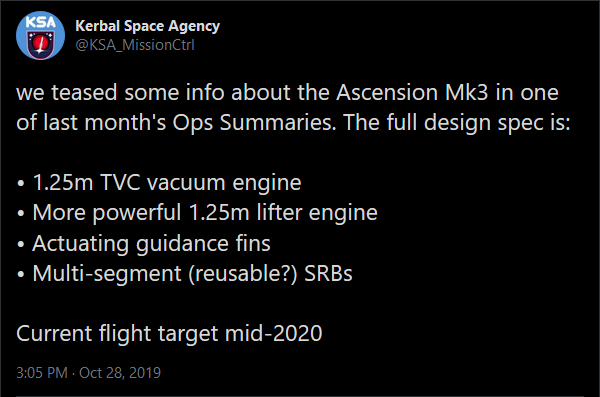
In the latter half of this year we hope to also debut the Mk3, the full design spec of which you can review here. This was officially approved last week although the production dates have been pushed back. The Mk3 should be the rocket that lets us send payloads into orbit around Mun and Minmus, perhaps this year.

Finally, work is also being done on the Mk1-B capsule that will debut later this year, retaining single-occupancy but upgrading various systems & design.

Read the rest of this entry »