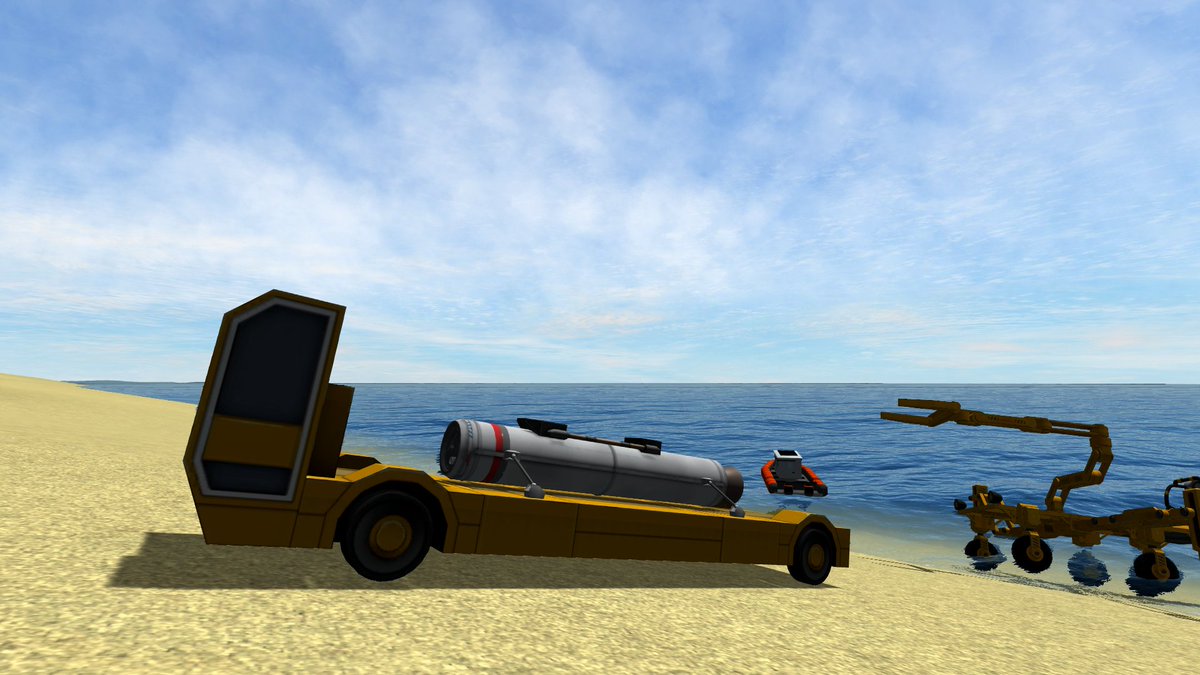
 Specialists Bob & Bill embark on another long distance sea voyage to gather temperature data over Sector PHCV-843 near the Great Desert for Probodobodyne Inc



Feb 15 2018
Specialists Bob & Bill embark on another long distance sea voyage to gather temperature data over Sector PHCV-843 near the Great Desert for Probodobodyne Inc
Feb 14 2018
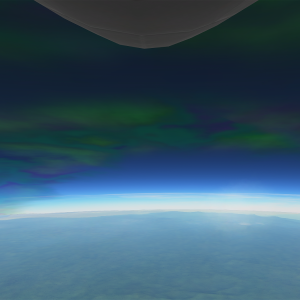
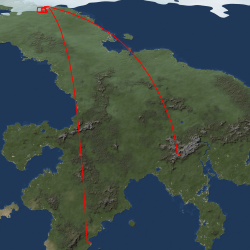
 Captain Jebediah and Commander Valentina fly the longest and furthest mission yet, but unfortunately are not able to complete their observation of Area KV-001 due to hazardous radiation
 |
 |
Feb 08 2018
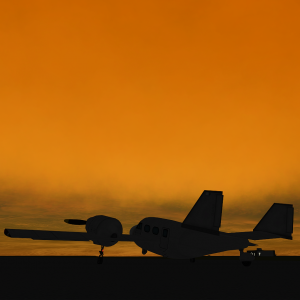
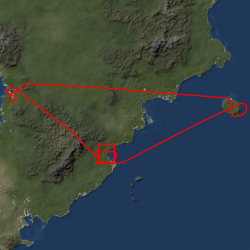
Commander Valentina and Captain Jebediah embark on the Deuce’s first official contract mission to survey Zone 76-CV5 and Sector PH2W7C while testing newly-installed science instruments. Their return to KSC is endangered by uncooperative landing gear
 |
 |
Feb 07 2018
 The Deuce is set to begin regular service this week after completing a maintenance checkout and fitting of an external camera. Although it performed well throughout its flight trials and recent PR tour last month there are still two small issues that engineers would like to address with a minor design refresh – power and pitch control. The current engines in use for the Deuce are extremely well-used and proven airship engines to give the development team one less issue to worry about when considering the dangers of testing a new aircraft. However it was shown during high-G maneuvers that the fuel can be pulled back from the engines, causing them to stall. They are also powerful enough to fly the Deuce with just one engine active but still give a small margin for performance. A new propeller engine is being specially designed for use in aircraft and will be tested on the Deuce. The second problem, pitch control, will be addressed by trying to add some positive angle of incidence to the entire tail section to have a built-in increase in pitch without having to increase the deflection or sensitivity of the elevator controls. Whether this leads to a more stable craft will depend on simulations and actual testing but that is the plan. Otherwise, a fuel tank in the tail like the Civvie could allow pilots to better control the aircraft’s center of mass at the expense of some cargo capacity. These changes will be made for an entirely new Deuce that has been ordered and will be built over the next two months.
The next project for Genesis has also begun development, focusing on providing fast cargo delivery capabilities. The K-3X will be a universal design that can be built to order at various sizes to suit the needs of the buyer and will be capable of flying in and out of all 4 airports currently on Kerbin. A deal is being worked out between C7 Aerospace and KSC to use this facility as an airport servicing Umbarg. We expect further news on the project towards the end of Q1 2018.
Feb 06 2018
 Engineers on the Progenitor team have spent the past week carefully analyzing telemetry data not only for the most recent fourth flight of the Mk5 Block I but as well for the entire series of Block I flights. The second flight of the Block I especially was of interest given that it reached nearly the same height and followed a much different trajectory. As usual, we will take a look at the details of the fourth flight first and then move on to the comparative analysis that leads to decisions made for the future of the Progeny rockets.
After the numerous delays, the rocket lifted off from the launch pad at precisely 10:00:00.03 local time, soaring up into mostly-clear skies on its first stage 0.625m booster pumping out an initial thrust of 67.2kN for a TWR of 4.02. The nose pitched up only 1.4° before beginning to fall as the rocket tracked eastward away from the Kerbal Space Center. The first stage booster’s thrust profile began to reduce thrust 5 seconds after ignition, relieving stress on the rocket as it continued to climb and passed through a maximum dynamic pressure (MaxQ) of 77.371kPa at L+17.79 seconds. The booster thrust tailed off to just 17.3kN by the time propellant ran out at L+33.67 seconds at an altitude of 14.4km – it was decoupled cleanly one second later and the fins were shredded properly one second after that while the rest of the rocket coasted into the upper atmosphere.
Feb 04 2018
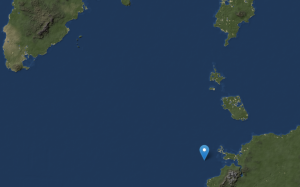
 Specialists Bob & Bill take a sea voyage out to Site DAW-LEG to gather temperature data for Kip Engineering
Feb 01 2018
 The original plan for the Progeny series of rockets was to end with the Mk5 being the most-capable design of reaching space above Kerbin. This was almost the case, except for the visual design change of losing the upper-stage fins and the development of the Block I and Block II designs (the Block I offers up better performance over the original Mk5 design). With all these changes there was talk late last year about moving on to a Mk6 designation but the team wanted to wait to ensure no more major design changes were needed. The most recent flight last week is still undergoing analysis but the early consensus is that the overall design is ready to be locked in. The Mk6 will still see tweaks to performance but the overall look will remain the same. The Mk6 will only fly as a Block I or Block II, there is no “base model” like there was with the original Mk5. Since the Block I has proven it is capable of reaching both low and high space above Kerbin, this has called into question the purpose of the more powerful Block II design, which was originally meant to fly above 250km as it was assumed the Block I would not be able to reach or get any higher than that. Thanks to the radiation measurements taken on the Block I flights however there is currently at least one goal that the Block II can possibly satisfy – determining how far the region of high radiation around the planet extends.
Jan 31 2018
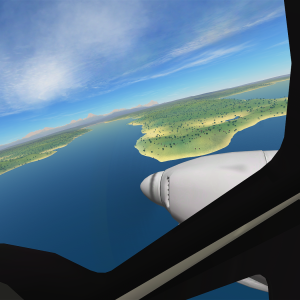
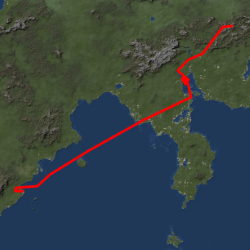
Captain Jebediah and Commander Valentina bring the Deuce home from Ockr on its longest flight yet while along the way taking a look at an area that may one day support the first new surface colony
 |
 |


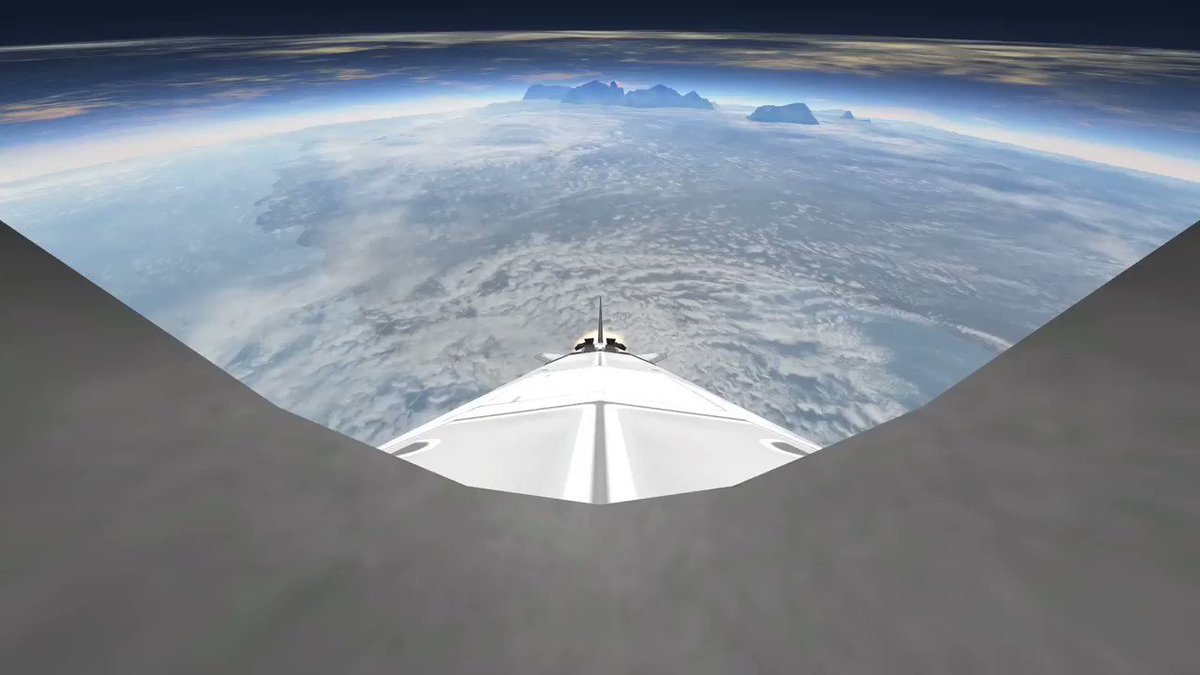


(previous record)
Heaviest Rocket Launched, Minus Payload: 19.862t (17.5t)
Heaviest Payload Launched, Orbital Trajectory: 1.662t (767kg)
Tallest Rocket Launched: 16.782m (16.212m)