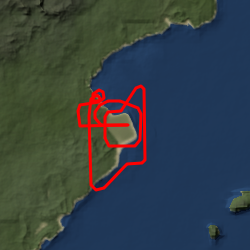
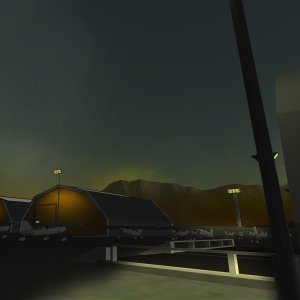
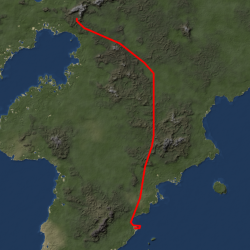
 Commander Valentina had to divert to Kravass General Airport at the end of her last mission so now she needs to get herself and the aircraft back to KSC
 |
 |



Dec 01 2017
Commander Valentina had to divert to Kravass General Airport at the end of her last mission so now she needs to get herself and the aircraft back to KSC
|
|
Nov 30 2017
Nov 27 2017
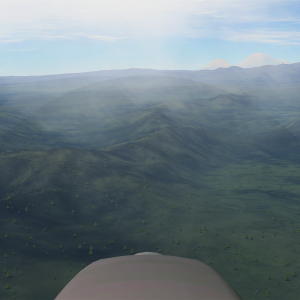
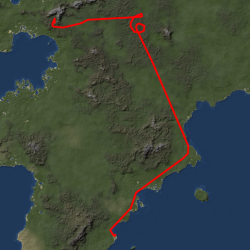
Commander Valentina gets to try her hand at storm chasing as the Field Research Team want her to fly into a storm to measure pressure over Area D-H6Z, where the storm is believed to be by this time
 |
 |
Nov 23 2017
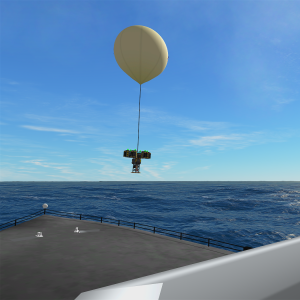
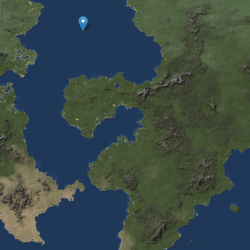
 Specialists Bob & Bill carry out the KSA’s northern-most mission to gather new science and also test out data relay through Kravass from Zone JB354 for Nehemiah Engineering
 |
 |
Nov 21 2017
 We’ve learned a lot over this past year with the Progenitor program, mostly that we still have much more to learn when it comes to building and flying rockets. The only way we’re going to get that additional knowledge is by trying and the time has come to try to establish a permanent presence in space. The Ascension program will aim for the goal of placing a probe into orbit next year!
Rockets go up, and going upwards can also be referred to as ascending, which is probably the first thing that would come to someone’s mind when seeing a rocket program called Ascension. There’s a double-meaning here though, because the word ascension can mean more than simply going up, but also reaching a new level or higher position. We are indeed aiming above what has been achieved before and even though we can already send rockets higher than the altitudes we would initially aim to orbit at, staying up there is a whole new level of technology and knowledge. Speaking of technology…
We already have the power to reach orbit. Based on the performance of the Progeny Mk5 Block I we’ve calculated the Block II has enough Δv to insert into a very eccentric orbit with a perikee 20-50km outside of the atmosphere. This would be horribly complex to achieve however because the Mk5 lacks the ability to control its flight path other than to coast between burns and let its nose fall to flatten out the trajectory. The timing would need to be very precise and well-calculated, especially since none of the engines can be lit more than once and only one can be throttled.
Nov 20 2017
Nov 15 2017
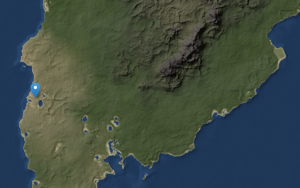
 Specialists Bob & Bill traverse overland to the West Shore Desert to gather temperature data from Zone DJSNM for use by Albert Kerman Industries
Nov 14 2017
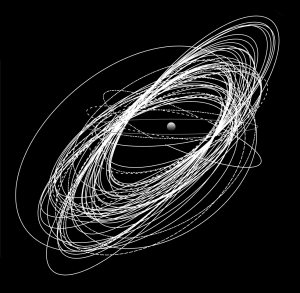
Initial plot of orbital propagation
The Asteroid Tracking Network discovered a new companion of Kerbin last week as the asteroid originally designated KUH-563(C) flew through Mun’s SOI while scopes were keeping a close eye on it for just such a passage. A few days later after more observations to nail down its orbit the Kerbin Astronomical Society made the formal announcement of the new moonlet, dubbed Alaba, which is ancient Kerbskrit for “second child”. Technically this is the 5th detected moonlet of Kerbin but in relation to our only other current companion Chikelu, the name fits.
The observed orbit of Alaba showed that it had to have been a resident of the Kerbin system for several weeks to several months already. The eccentricity of its current orbit is 0.46, which is too small to be an original capture orbit. Over several encounters with Mun the asteroid has slowly developed a smaller and more circular orbit. How many? We don’t know and probably never will. The fact that it’s been around for a while though does make one wonder what else might be nearby we haven’t spotted yet!
After the initial orbit was locked down the data was plugged into the trajectory analysis tool we use here at the KSA to determine how Alaba would behave on future Mun encounters to try and predict its eventual fate. A captured object like this has three options: crash into Kerbin, crash into Mun or get ejected back out of the system. After 58 more encounters is looks as if Alaba will eventually smash into the southern hemisphere of Mun in early 2021.



(previous record)
Heaviest Rocket Launched, Minus Payload: 19.862t (17.5t)
Heaviest Payload Launched, Orbital Trajectory: 1.662t (767kg)
Tallest Rocket Launched: 16.782m (16.212m)