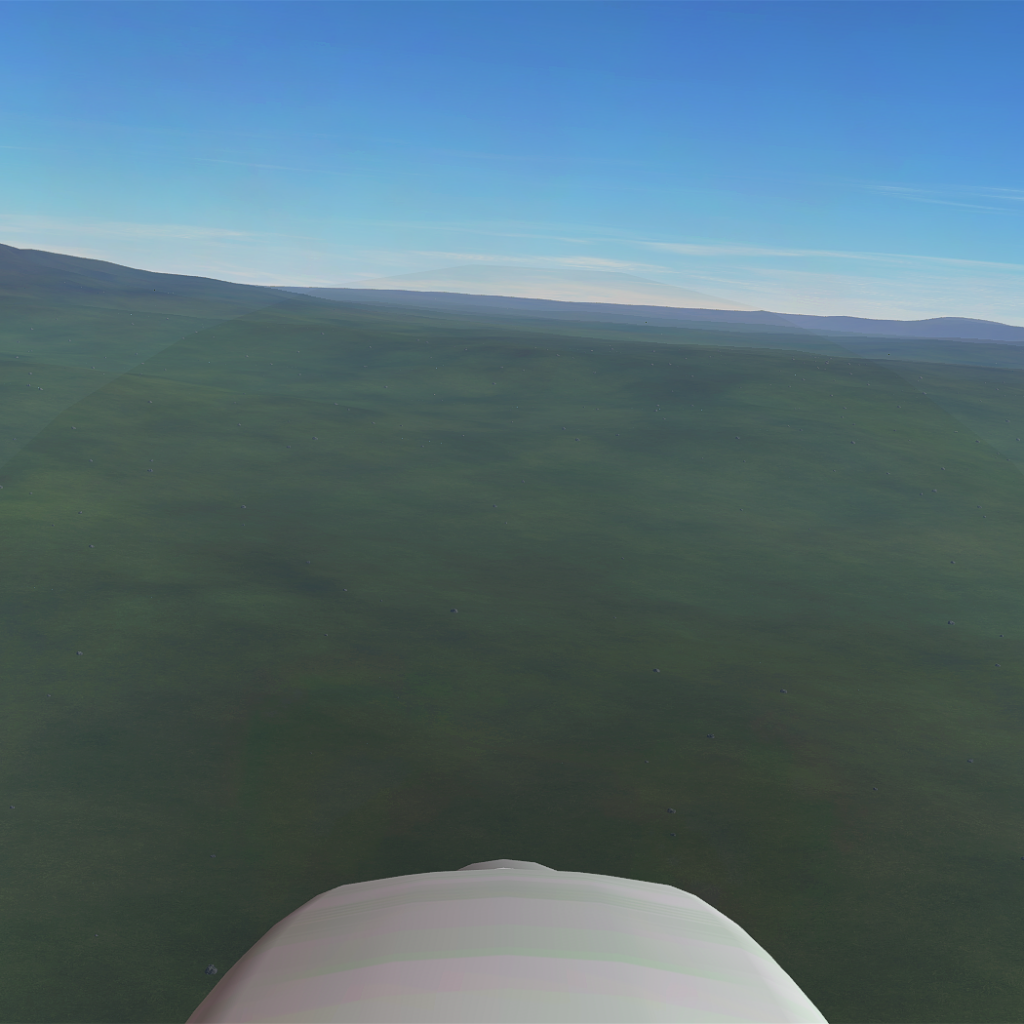
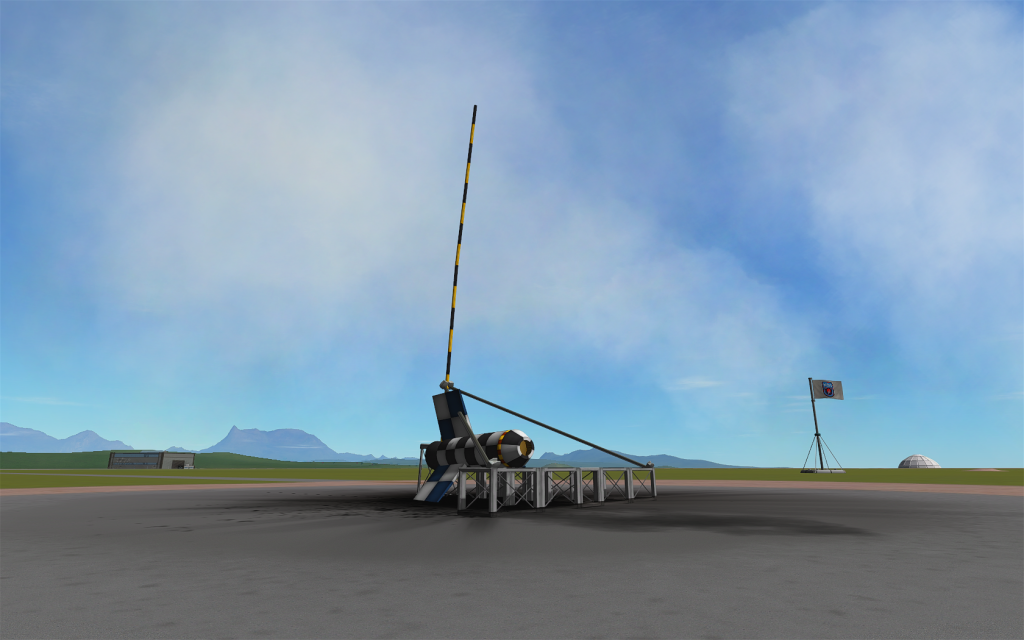
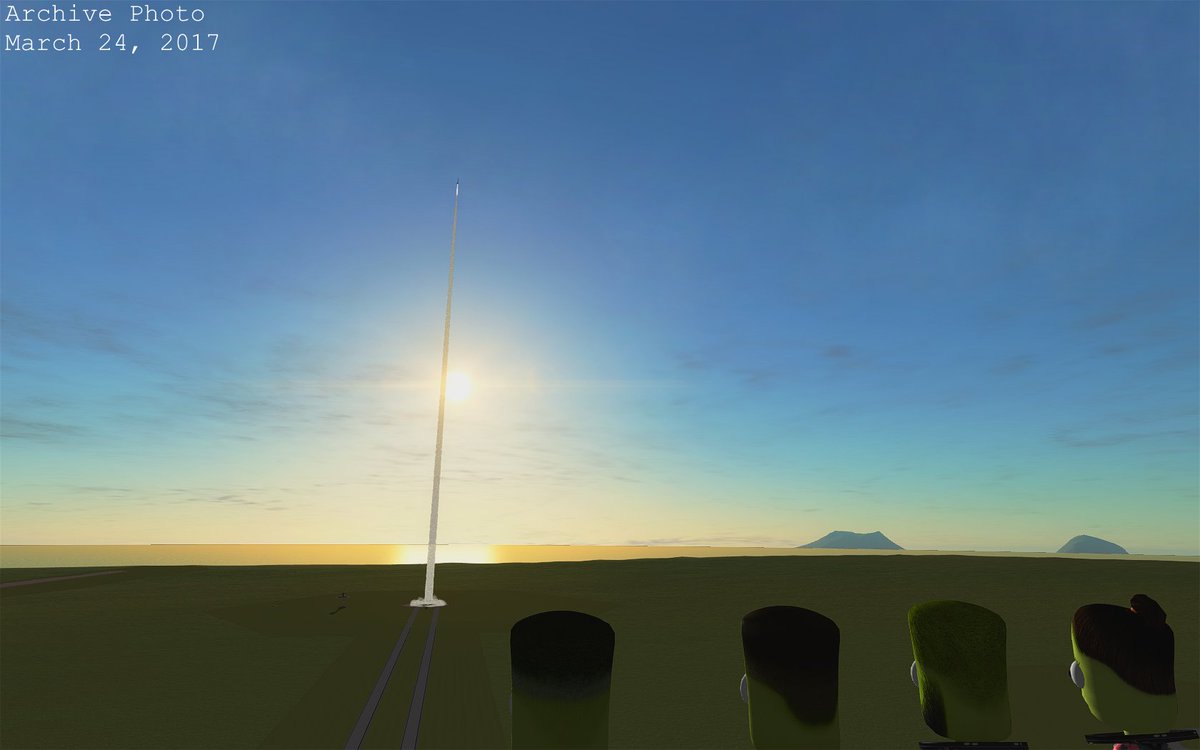
 Hello everyone, Drew Kerman here, Operations Director for the KSA. I’d like to take some time to explain why despite the fact that we’ve been going to space now for over three months we haven’t taken any photos from above the atmosphere and won’t be doing so for another few months at least. Although it’s true space photos would not be a huge science return and mainly be of benefit only to our PR department (do we have a PR department? I should know that) that’s not the reason. Simple fact is that our current fleet of sub-orbital rockets, the Progeny family, are not a good platform for taking photos for numerous reasons.
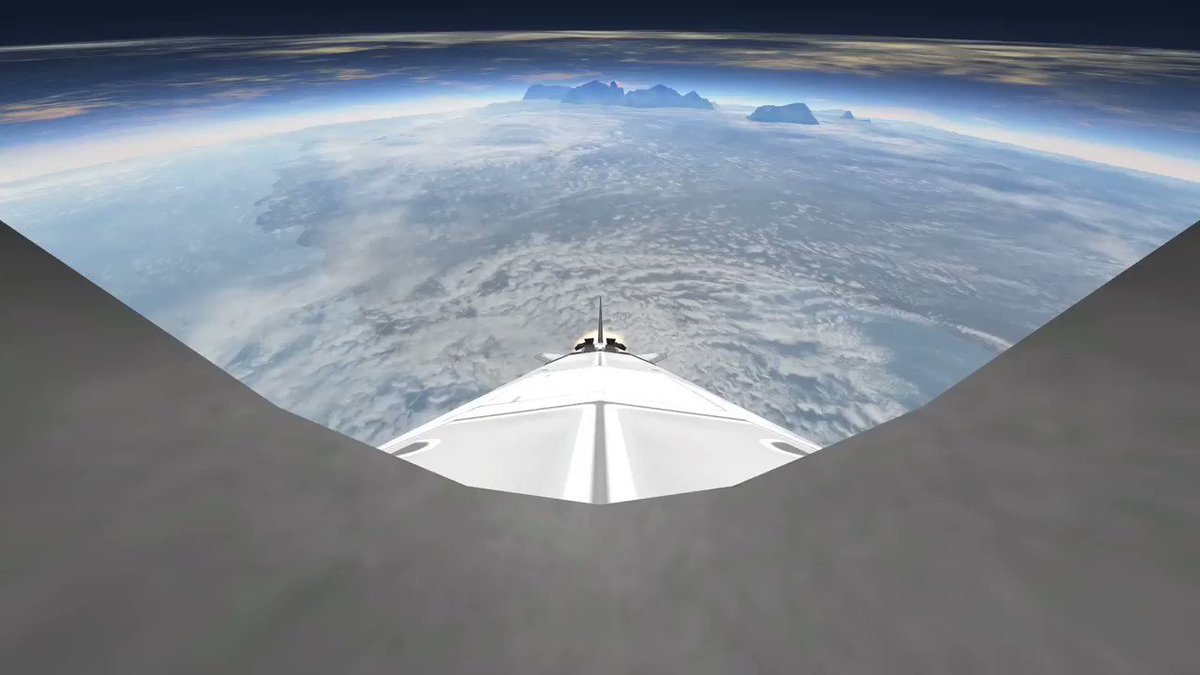
The main reason is that because they are unguided ballistic rockets in order to help maintain stability during powered ascent their fins are slightly angled to spin the rocket up. This is a very easy way to keep a rocket flying straight and stable but because we are using the fins to induce spin rather than, say, small external thrusters, the spin rate increases throughout the entire flight while the rocket is under thrust. By the time the third stage has expended its fuel the rocket is generally spinning at a rate of ~150RPM or nearly three times per second. To get an idea of what that would look like, here is a video taken during a Progeny Mk2.1 launch where the payload was only spinning at roughly 120RPM. Any photos taken at such speeds would be extremely motion-blurred, especially given the longer exposures we would want for photos from space.
A solution to this problem comes from a technique known as a yo-yo despin, which you can see an example of in this video simulation. Progenitor engineers have already modeled a similar setup and determined it’s possible to get this to work for the Progeny rocket by removing the batteries on the upper payload truss to install two winch units that would deploy the counter-weights once the payload is in space, slowing down the spin rate so that a single camera mounted on the lower truss (the other payload position would be a battery) could get shots of various views as the rocket rotated more slowly. However to deploy the counter-weights means detaching the upper payload fairings, and that could bring about a new set of problems.